AI Overview Keywords: How to Find Them in Your Market
By Ben — Founder
AI Overview keywords are search queries that trigger Google’s AI Overview panels instead of traditional blue links. To identify them for your market, you need live SERP analysis, not static lists. Andy’s methodology uses real-time SERP data collection to reveal which keywords show AI Overview panels in your specific market, helping you understand Google’s intent and focus on keywords where organic rankings actually matter.
You picked a keyword with low difficulty, wrote a solid article, and got nothing. No traffic. The reason is probably an AI Overview panel sitting on top of the results, answering the question before anyone scrolls to your link. This is one piece of how AI is reshaping the entire SEO landscape, and it changes which keywords are worth your time. Here is how to find the ones that hurt you, and the ones still worth chasing.
What AI Overview Keywords Are (and Why They Matter)
An AI Overview keyword is any search query where Google generates a synthesized answer at the very top of the page. Instead of ten blue links, the searcher sees a paragraph of AI-written text, a few cited sources, and the organic results pushed far below the fold. The keyword still has a difficulty score and a search volume. It just behaves completely differently when someone types it in.
This is the SERP shift in one sentence: the answer now sits above the links. For a beginner running SEO without a dedicated hire, that matters because everything starts by the search intent. Google reads a query, decides whether a generated answer beats a list of pages, and acts on that. You cannot change what people are typing. You can only decide which queries are still worth ranking for.
AI Overviews appear on roughly 20-30% of informational queries, according to Ahrefs’ 300K keyword study. That is a big slice of the exact queries most founders write content for. Understanding which of your keywords fall in that slice is the difference between a content plan that works and one that quietly bleeds effort. For the strategy side, here is a deeper strategic dive on AI Overviews and organic ranking.
Why Keyword Difficulty Scoring Is Now Flawed
Keyword difficulty was a clean number. A score of 20 meant easy, so you wrote the article and ranked. That logic is broken now, because the score has no idea whether an AI Overview is eating the top of the page.
Picture a keyword with difficulty 20. You rank it. You hit position one. And the AI Overview panel above you answers the question so completely that almost nobody clicks. Your difficulty score said “easy win.” The live SERP said “zero organic CTR.” Both can be true at the same time, and only one of them pays your bills.
This kills the strategy that worked in 2024: find low-KD long-tail keywords, write fast, collect traffic. Reforge’s 2026 strategic framework names this directly. Search behavior moved, closed-web answers got better, and the old playbook of chasing easy informational terms now sends you straight into the queries Google answers itself. A difficulty score reflects how hard it is to rank. It says nothing about whether ranking is worth anything.
So the real number you need is not difficulty. It is presence. Does this keyword trigger an AI Overview in your market, right now? That answer does not live in a static spreadsheet. It lives in live SERP analysis, run for your specific keywords. Wondering if this is already costing you clicks? Here is the data on whether AI Overviews are causing organic traffic decline.
How to Identify AI Overview Keywords for Your Market
Static lists of “top AI Overview keywords” are everywhere, and they are mostly useless to you. AI Overview presence is not fixed. It varies by geography, by the searcher’s history, and most of all by market. The same query can trigger a panel in one industry and show plain blue links in another. A list scraped from someone else’s market tells you nothing reliable about yours.
Here is a concrete example. Take a definitional query like “what is API rate limiting.” In a tech audience, Google is confident it can synthesize a clean answer, so an AI Overview shows up. Now take a query like “what is sepsis diagnosis criteria.” In healthcare, Google is far more cautious about generating medical answers, so the same question format often still returns ranked sources. Same query shape. Different market. Opposite result. A generic list flattens that difference and leads you to the wrong call.
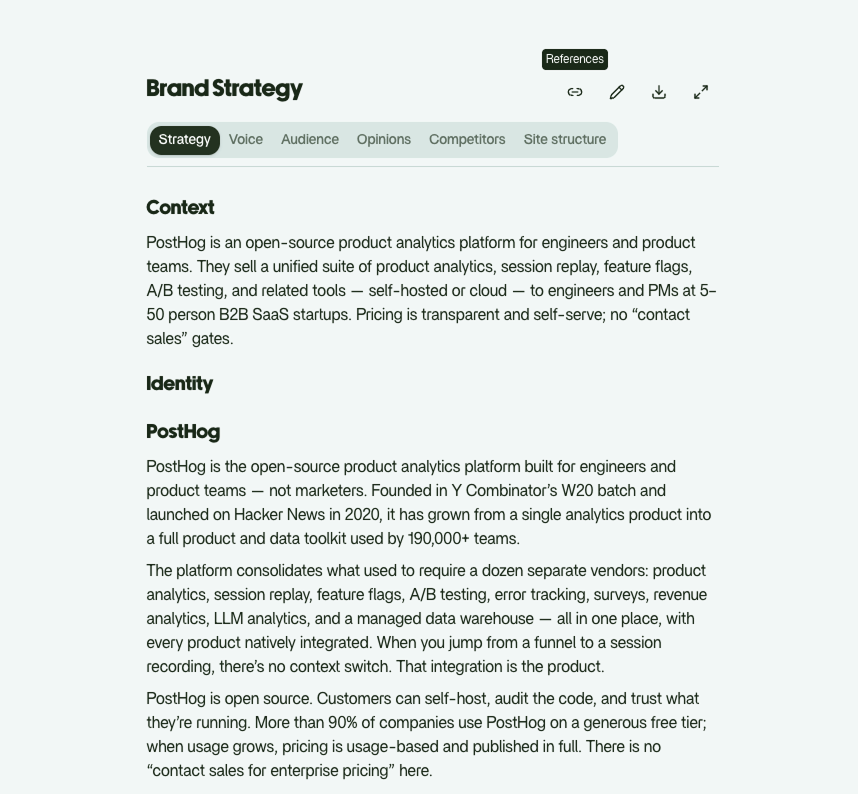
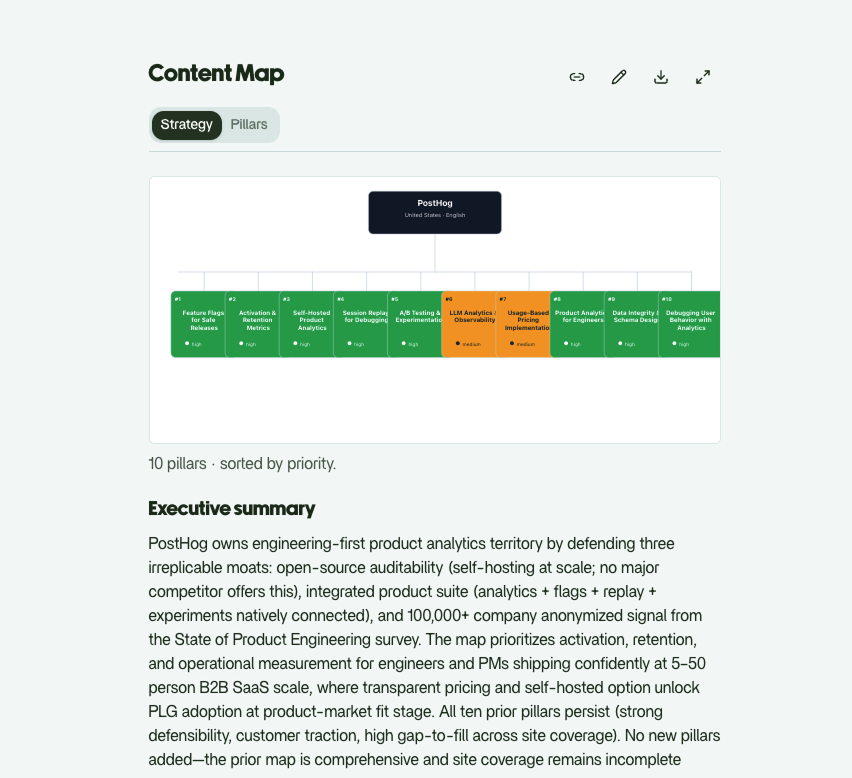
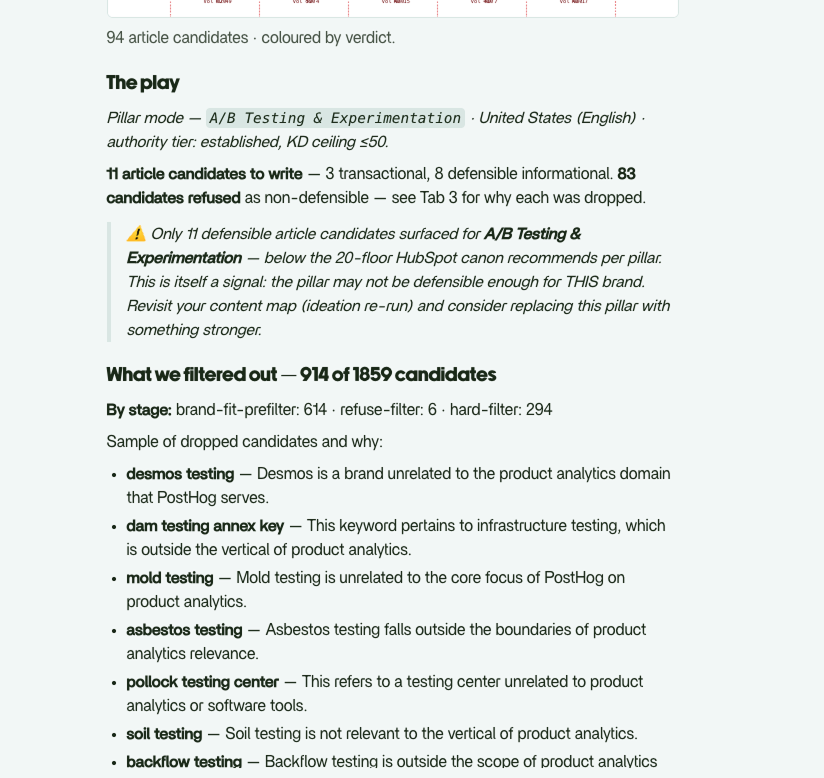
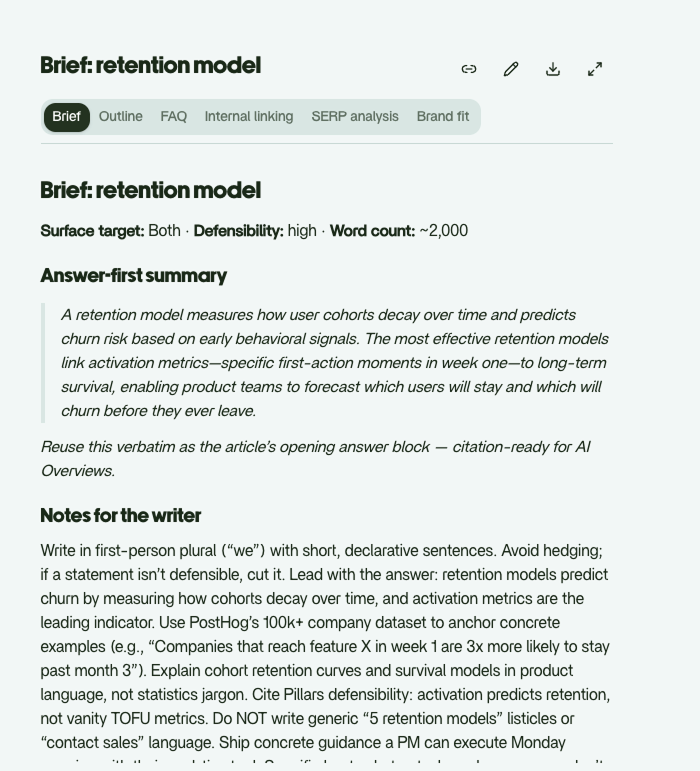
This is exactly why Andy’s methodology uses live SERP data collection instead of aggregated lists or recycled paid-tool rankings. For every keyword research run, Andy fetches the SERP in real time and pulls volume, difficulty, and search intent together. It sees what is actually on the page for your market, not what was on it for someone else six months ago. That is also why keyword research without brand context is isolated work. It produces one article, not a strategy.
You have three ways to check AI Overview presence:
- Manual SERP checking. Free and accurate for your exact market. Type the query, see if a panel appears. The catch is it does not scale past a handful of keywords, and results shift over time.
- Paid tools (Semrush, SE Ranking). They flag AI Overview presence at scale and save hours. They cost money, and the AIO data lags behind the live page.
- Live SERP collection (Andy’s approach). Real-time fetch per keyword, tied to your brand and your market, with the strategic reasoning attached. This is not just a tool. This is really an app that tells you why this keyword is good or why this keyword is not good.
Whatever method you choose, document what you find. Keep a running list of which keywords in your niche trigger AI Overviews and which stay clean. Re-check it on a schedule, because presence changes. That document becomes the spine of your keyword strategy.
What to Do with AI Overview Keyword Data
Knowing which keywords trigger AI Overviews is only useful if it changes what you write. It should. The shift is simple: stop pouring effort into AIO-heavy informational queries, and move toward non-AIO informational terms and branded search. If you do not have a strong opinion, your content is going to be replaced by AI, because AI can easily generate the generic version. Original data and first-party experience are the informational content still worth investing in.
Branded search gets more valuable as AI Overviews spread. When someone searches your brand name or a branded query, Google rarely throws up an AI Overview, and far fewer competitors crowd the result. The page is yours to own. So the goal shifts from renting traffic on commodity terms to building a name people search for on purpose. Think in clusters and content pillars, and you signal to Google and to LLMs that you are an expert in your space.
That changes how you measure success too. Raw long-tail traffic is a weak KPI in 2026. Branded search volume and your branded-plus-transactional mix tell you far more about whether your SEO is actually building a business. This connects directly to how to measure SEO success when AI Overviews are present. The methodology behind all of this synthesizes Backlinko’s canonical 7-step SEO program with Reforge’s 2026 strategic framework, the two most rigorous public views on how SEO works now.
A defensible keyword strategy starts from AI Overview presence in your market, not from a borrowed list. Map which terms Google answers itself. Skip those. Double down on branded queries, high-intent transactional terms, and the informational content only you can write because it carries your content and your strong opinion. That is the plan that survives the next model update.
FAQ
How do you trigger an AI overview?
Broad informational queries trigger them: definitions, how-to questions, comparisons, “best X for Y” searches. Google looks at the query and decides whether a synthesized answer serves the searcher better than a ranked list. When it judges yes, the panel appears. Narrow, branded, or transactional queries usually do not trigger one.
Which keywords are most likely to show AI Overviews?
Low-difficulty informational keywords are the prime candidates, which is the cruel twist for anyone still chasing easy wins. Branded queries rarely trigger AIOs. Market matters enormously here, so the same keyword can show a panel in tech and none in healthcare. Live SERP checking for your market is the only reliable test.
Can you find free tools to identify AI Overview keywords?
No free tool tracks AI Overviews accurately at scale. The free option is manual SERP checking, which is actually the most accurate method for your specific market, just slow. Paid tools like Semrush and SE Ranking flag AIO presence across many keywords, but their data lags the live page. Live SERP analysis is the dependable signal either way.
Should you avoid targeting keywords that trigger AI Overviews?
Not always. An AI Overview shifts value rather than destroying it, pushing the payoff toward branded and non-AIO keywords. The smart move is to identify what triggers AIOs in your market first, then choose targets on purpose. Avoid the ones Google answers itself, and invest in the ones where your ranking still earns the click.