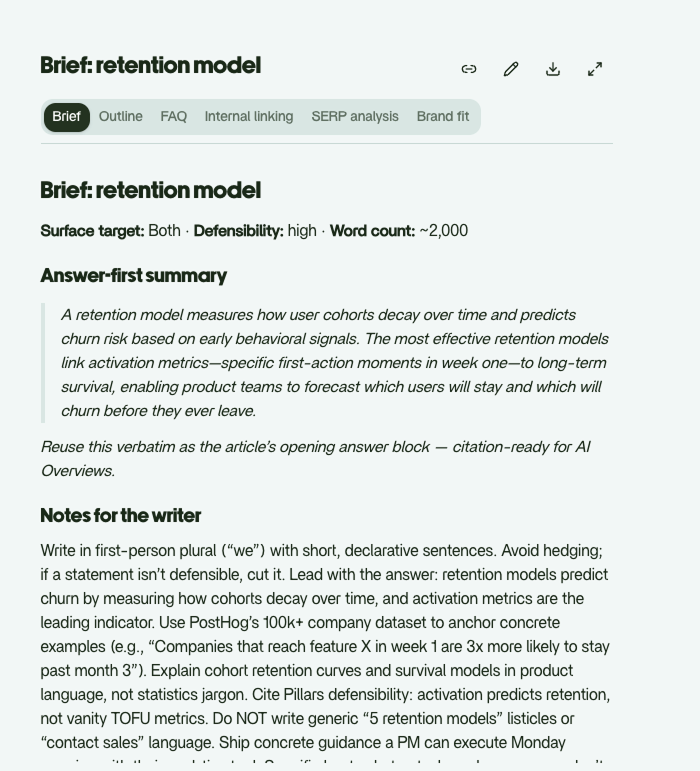
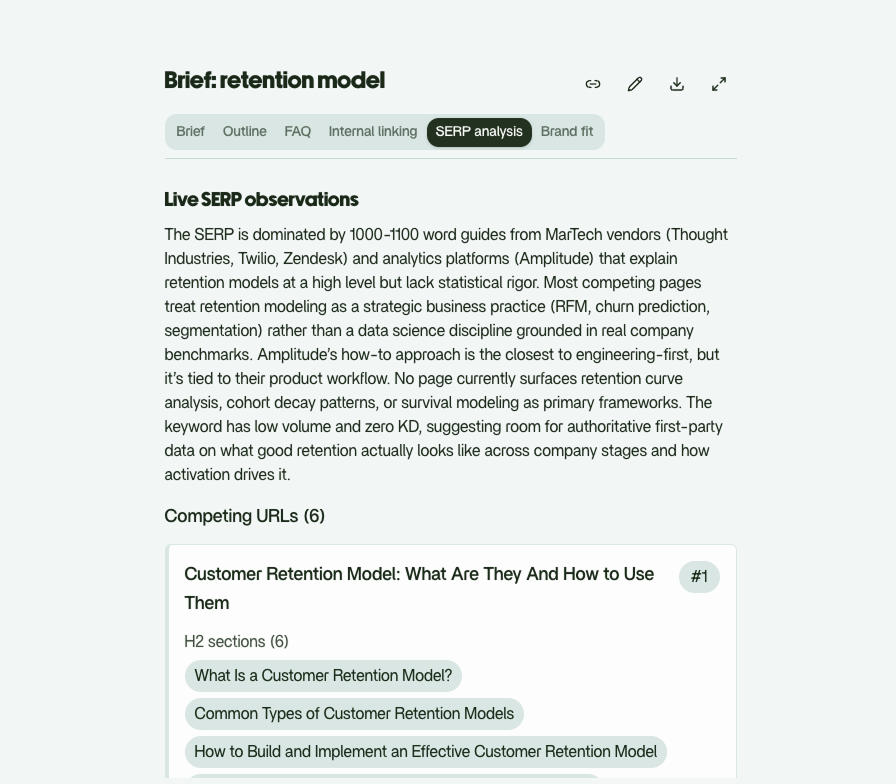
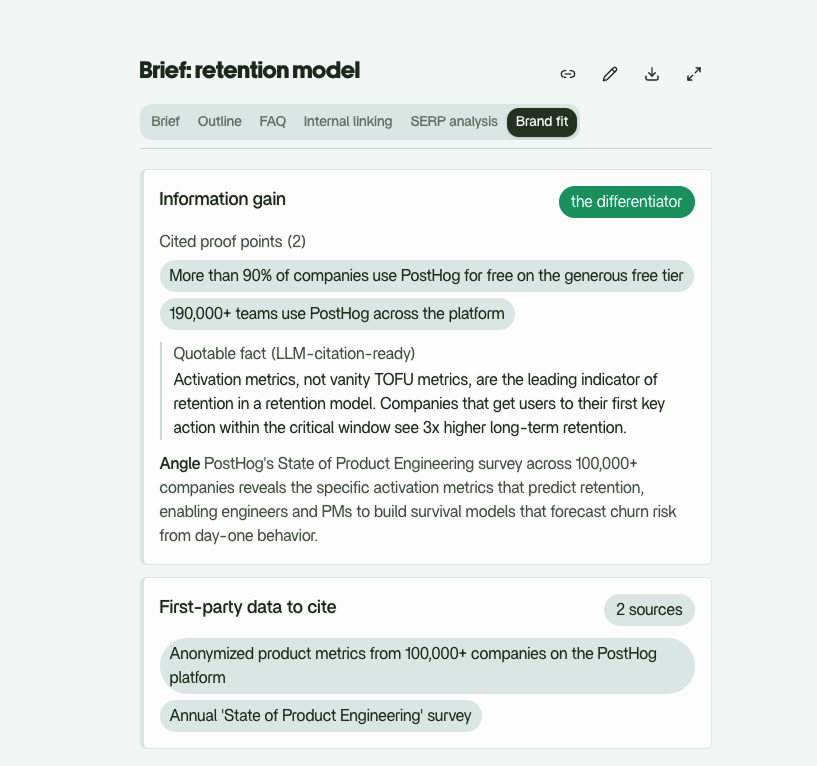
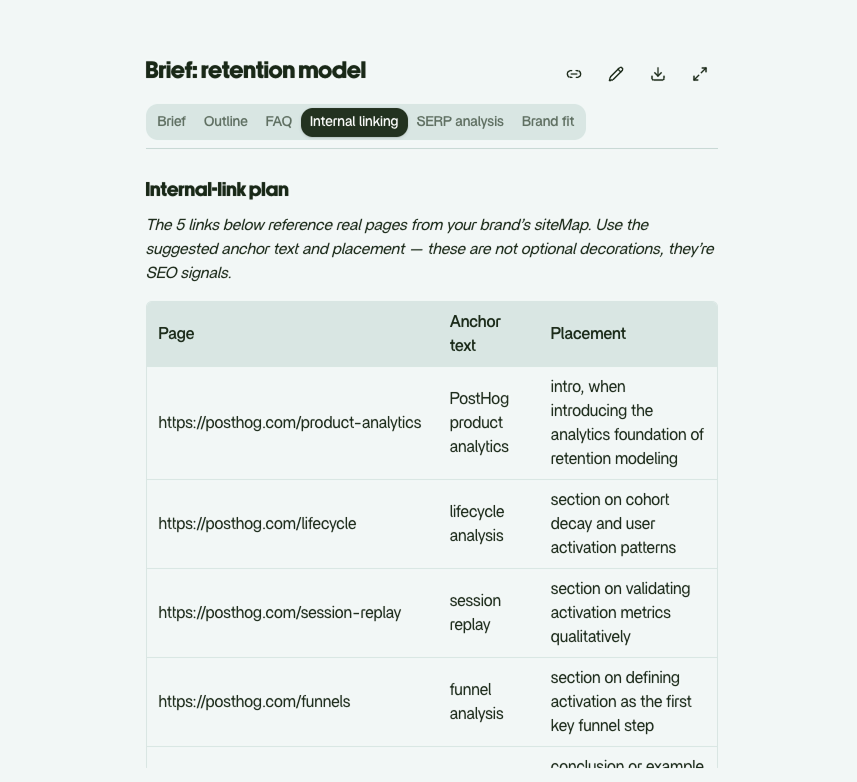
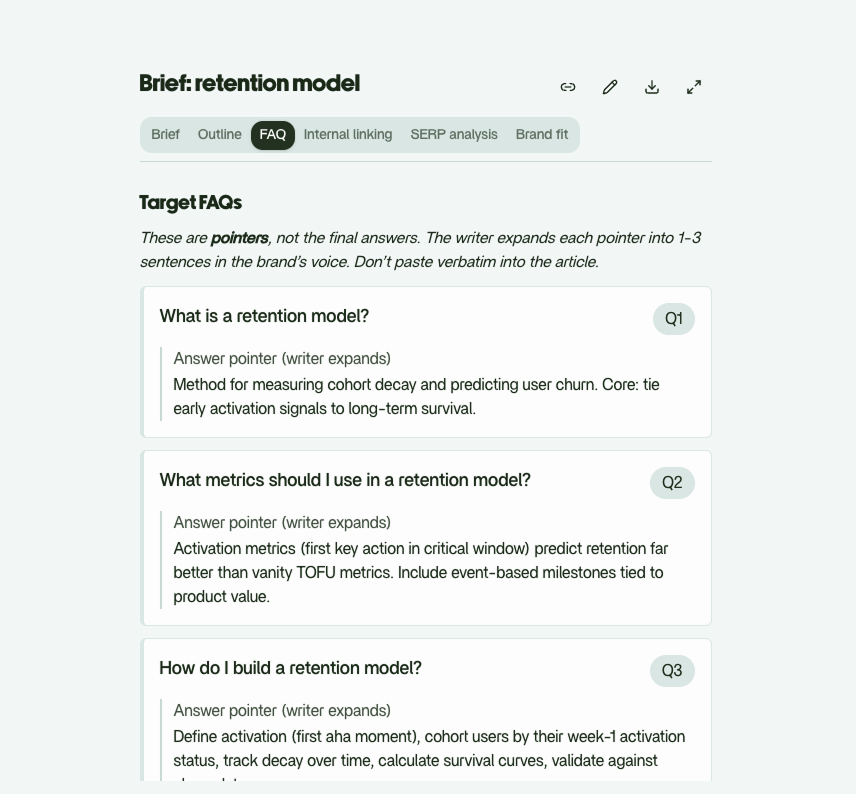
Content brief: the bridge between research and writing
The brief is the planner. The article writer is pure execution. Every strategic decision about the article (the angle, the structure, the proof points, the line that gets quoted) is made here, before a single sentence is written.
What I do, behind the scenes
1. Read your brand strategy. Your expertise, opinions, refusals, the country you rank in.
2. Pick the article. From your keyword research. The primary keyword, variations, verdict, and angle come along automatically.
3. Check live Google. Top 10 results in your country and language. Google moves. Briefing against last month's results misses.
4. Read the top 10 articles. For each one: title, headings, word count, format (listicle, guide, comparison, tool page). I learn what the page that beats them has to look like.
5. Search your knowledge base. Anything you uploaded about your business that this article could cite as proof.
6. Pull the People-Also-Ask box. Real questions Google shows for this keyword. These become the FAQ at the bottom of the article.
7. Build the brief. I pull everything together into one document the writer reads as a contract.
What the brief contains
The 8 fields a real SEO agency would write:
- Primary keyword
- Variations (3 to 15)
- Word count (short, medium, or long)
- The top 10 articles I read, with their structure
- What I saw on the live Google page
- Which of your existing pages this article should link to
- Who's reading this (their level, what they want)
- The outline: title, answer-first summary, sections, FAQs
Plus what I add for the AI-search era:
- Defensibility score. 1 to 10. If you see a 4, reconsider.
- The angle. What this article will say that none of the top 10 says, citing your real proof points.
- The one quotable line. One sentence written so AI summaries pull it. The difference between an article that ranks and one that gets quoted inside ChatGPT or Perplexity.
- Recommended author from your team.
- Source material from your knowledge base, with notes on what to quote.
What you get back
One brief the writer reads as a contract. If you originally asked for an article, I roll straight into writing it next. About 3 minutes.