Branded Content Strategy: Why Founder-CMOs Prioritize Owned Demand First
By Ben, Founder
Branded content strategy focuses on building owned demand—content that attracts prospects already searching for your brand or product category. It differs from long-tail keyword chasing because it targets higher-intent searches with clearer attribution to conversions. For founder-CMOs, branded content strategy is the competitive advantage: it delivers qualified traffic and proves ROI, making it the priority before investing in volume-based long-tail content.
Most SEO advice chases the wrong metric. You write a pile of long-tail articles, traffic shows up in a dashboard, and then someone on the board asks the only question that matters: did this drive revenue? You can’t answer. The attribution breaks somewhere between the blog post and the sale. I’ve watched this happen across multiple businesses, and the fix is not more articles. It’s a different starting point.
What Branded Content Strategy Actually Means
Branded content strategy is the work of building owned demand. Owned demand is the set of searches where someone is already looking for your brand, your product, or the specific category you compete in. That’s the asset. Not awareness for its own sake.
Here is where founders get tripped up. They hear “branded content” and picture a glossy brand-storytelling campaign, a video, a vibe. That’s not this. Brand awareness marketing tries to create feelings. Branded content strategy captures intent that already exists and turns it into pipeline. Two different jobs.
It’s also not the same as long-tail keyword content. Long-tail spreads you thin across hundreds of low-intent informational queries. Branded content concentrates on the searches closest to a buying decision. Start with your brand. Have a very strong understanding of what you do, what your strong opinion is, and where you actually win against competitors. Then you build content around the demand that belongs to you. If you want the deeper map of which terms count as yours, that’s the branded keywords pillar.
Why Branded Content Outperforms Long-Tail Chasing
Attribution is the real reason. When a prospect searches your category or your name and converts, you can trace the line. Search to session to sale. That trace is what founder-CMOs are missing, and our brand interviews say it loud: the number one pain founders report is broken attribution. They can’t prove SEO moves revenue, so SEO gets cut first in a tight quarter.
Long-tail content fails that test. A “what is X” visitor read a definition and left. Conversion intent and awareness intent are not the same buyer. One is comparing options and ready to act. The other is browsing. Branded content strategy wins on conversion intent and attribution clarity, which is why founder-CMOs prioritize it over long-tail volume.
There’s a cost angle too. Volume-based long-tail burns budget acquiring traffic that rarely buys. Branded searches convert at a higher rate, so your effective acquisition cost drops. Across the businesses I’ve run, branded search volume is the line that actually tracked with revenue. Not raw sessions. This is the heart of conversion-focused SEO: you optimize for the search where the wallet is open, not the one where the tab is about to close.
The distinction between these two motions matters enough that I broke it out in full in the branded vs. non-branded search distinction. Read it if the line between the two still feels fuzzy.
Building a Branded Content Strategy That Works
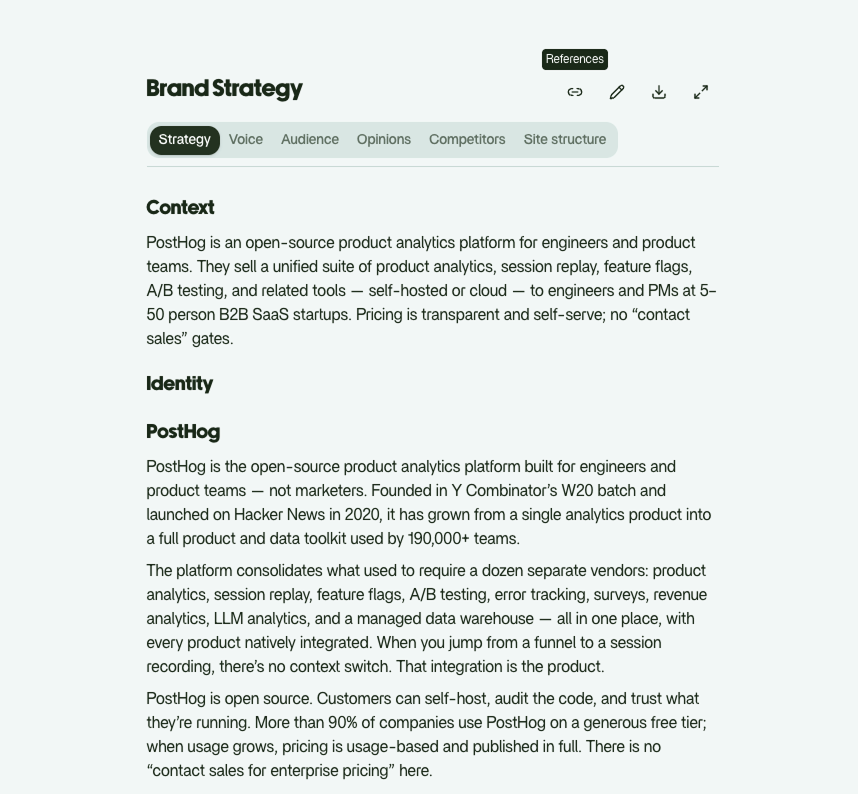
You cannot change what people are typing. So the first move is to find what they already type around you. Define your brand’s search universe: your brand name, your product names, and the category terms a buyer uses when they’re close to a decision. This is owned demand mapped out on paper.
Next, split that universe into owned and unowned searches. Owned: searches where your brand should be the obvious answer and you’re showing up. Unowned: category searches a competitor currently captures. The gap between those two is your roadmap. I walk through the full procedure in how to build branded demand, but the spine is simple.
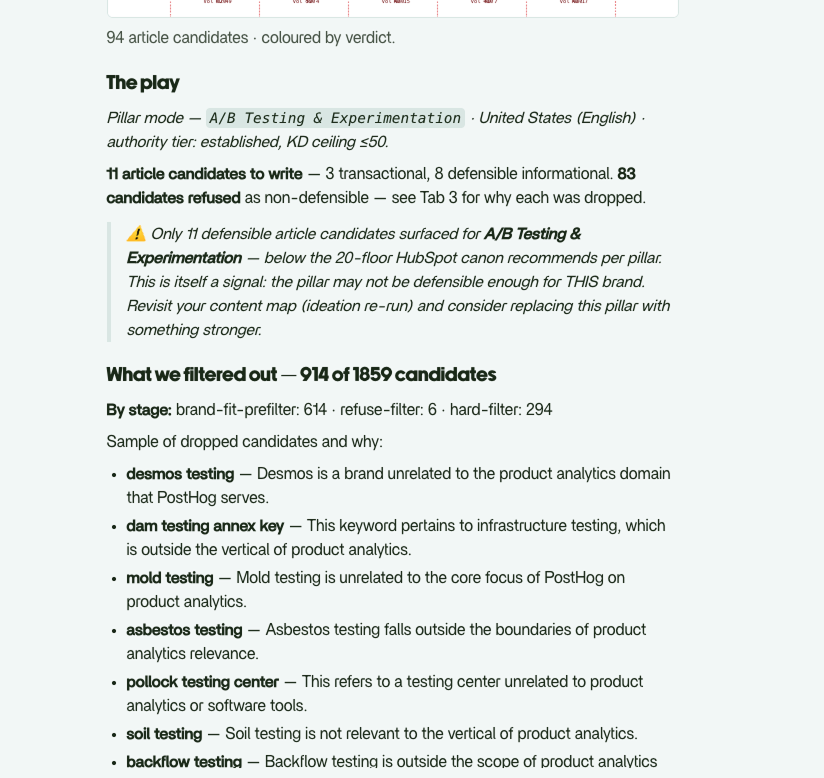
Then prioritize. Not every branded search deserves an article. A high-intent term (“[your category] pricing”, “[your product] vs [competitor]”) beats a vanity search every time. This is where Andy’s defensibility lens comes in. The framework, synthesized from Backlinko’s canonical 7-step SEO program and Reforge’s 2026 strategic methodology, sorts content into defensible and non-defensible buckets. Generic “what is X” explainers are non-defensible. AI Overviews absorb them and you get nothing. So you stop writing those and put the effort into terms a competitor would struggle to copy.
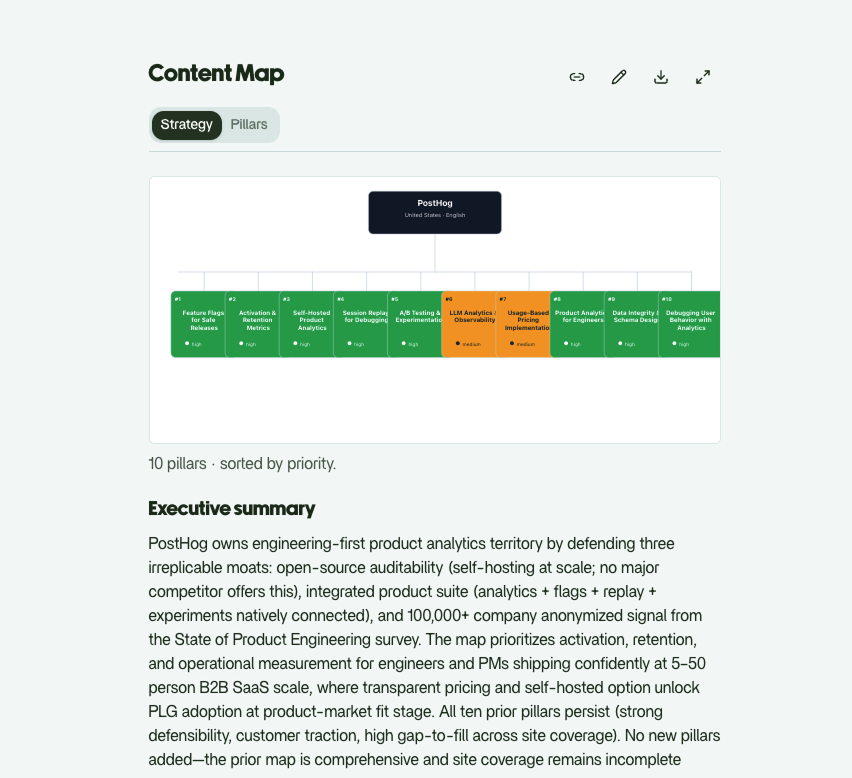
Last, think in clusters and content pillars. Build topic clusters around your branded demand, not around generic categories. A pillar on your core problem, supporting articles underneath, internal links between them. That structure is how you signal to Google and to LLMs that you are an expert in a defined space. One isolated article is not a strategy. A cluster is.
And remember why the opinion matters. If you do not have a strong opinion, your content is going to be replaced by AI, because AI can generate the bland version of anything in seconds. Your content and your strong opinion are the moat.
Measuring Branded Content Success: KPIs That Matter
Raw traffic is a vanity number in 2026. The primary metric is branded search volume growth. When more people search your brand and category over time, demand is compounding. That’s the signal that the strategy works.
Then layer in the conversion math. Click-through rate from branded searches. Conversion rate from those sessions. And the one that closes the attribution loop: revenue per branded session. That last number is what you put in front of the board. It turns SEO from a cost center into a line item with a return.
Track one more thing. LLM citation count. When ChatGPT, Perplexity, or an AI Overview cites your brand as a source, that’s the new rank, and most cited sources don’t even sit in Google’s top 20. Citations are a 2026 signal of authority that raw rankings miss. Watch them climb.
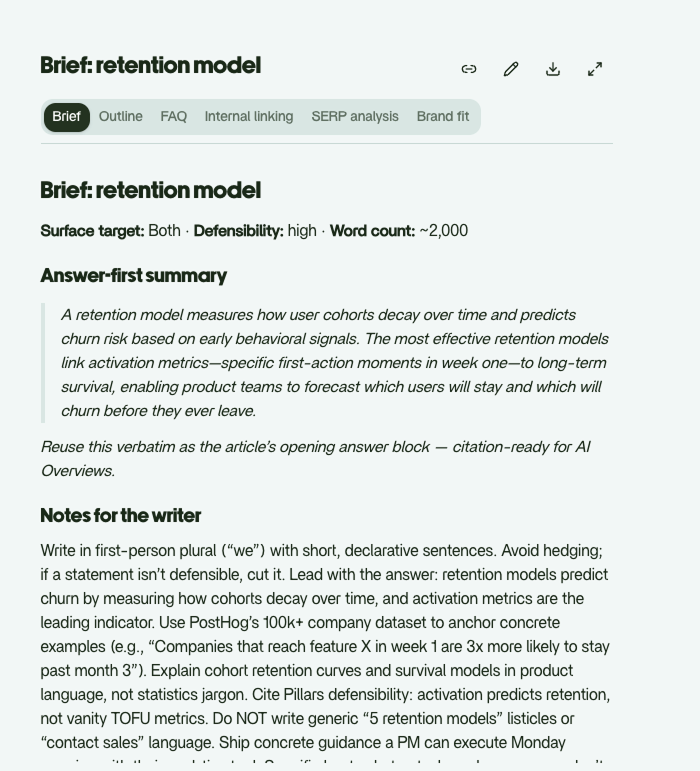
Here’s the order that holds it together. Everything starts by the search intent. Then brand, then clusters, then the article, then these KPIs to prove it worked. Measure backwards from revenue, not forwards from traffic.
FAQ
What’s the difference between branded and non-branded content strategy?
Branded content targets owned demand: searches for your brand and category from buyers close to a decision. Non-branded targets long-tail informational queries with broad reach and low intent. The practical difference is attribution. Branded content traces cleanly from search to conversion, while non-branded traffic rarely proves it drove a sale.
How do I measure whether my branded content strategy is working?
Track branded search volume growth first, then click-through rate, conversion rate, and revenue per branded session. Attribution visibility is the metric that matters most. If you can trace a branded search to a closed deal, you can finally prove SEO moves revenue, which is the exact thing founders tell us they can’t do today.
Should I build branded or long-tail content first?
Start with branded. It delivers qualified traffic and the attribution clarity that justifies further investment. Long-tail is the multiplier you add after the foundation is in place, not the foundation itself. Building long-tail first is how founders end up with traffic they can’t tie to revenue.
What are the core pillars of an effective branded content strategy?
Four pillars. Define your brand’s search universe, map owned versus unowned branded searches, prioritize high-intent keywords over vanity terms, and build topic clusters around your brand rather than generic categories. Done in that order, the strategy signals topical authority to both Google and LLMs and keeps every article tied to demand you actually own.