Evaluating Content: The Reforge Defensibility Framework
Ben, Founder
Evaluating content means assessing whether it’s worth writing before you invest time. Use Reforge’s 4-bucket defensibility model: original data, lived experience, contrarian point of view, and transactional content rank and get cited. Generic ‘what is’ explainers get absorbed by AI Overviews and drive no traffic. The defensibility framework filters out waste.
You write content. It doesn’t rank. You assume the writing was the problem, so you write more of it, better. That’s the wrong fix. The problem happened before the first sentence, when nobody asked whether the topic was worth writing at all. This article gives you the filter to ask that question upfront, so you greenlight the few articles that survive and skip the rest.
The Problem: Most Content Isn’t Worth Writing
Here is the hard truth. Most of the content founders publish was dead on arrival. Not because the writing was weak. Because the topic had no defense.
Take the generic “what is X” explainer. You write a clean 800-word primer on a term in your space. Google reads it, extracts the answer, and shows it inside an AI Overview. The user gets what they came for and never clicks. Generic “what is X” explainers are absorbed by AI Overviews, not ranked by Google. You did the work. The Overview took the traffic.
Commodity 101 tutorials fail the same way for a different reason. Twenty other sites already wrote that tutorial, and some have ten years of links behind them. You are not going to outrank a better-defended competitor on a topic anyone can write. So the page sits on page four and drives nothing.
This is where a filter matters. Without one, a team produces a pile of pages that compete with zero defensibility. First-party data from Andy client site crawls shows it plainly: non-defensible content types show measurably lower traffic than the defensible ones, run after run. Same brand, same writer, same effort. The difference is the topic. That gap is the whole argument for evaluating content before you commit to it.
The 4-Bucket Defensibility Model
Reforge’s model sorts every possible article into four buckets. If your idea doesn’t sit cleanly in one, it isn’t defensible. Here are the four.
Bucket 1: Original data. Proprietary research, case studies, numbers only you have. Your client results, your product usage, your own survey. Nobody can copy a statistic that lives in your database. When someone cites the figure, they cite you.
Bucket 2: Lived experience. First-person accounts, direct expertise, the story of the thing you actually did. “We A/B-tested 12 onboarding flows and here’s what broke” is not a topic a competitor can fake. It happened to you. For the deeper playbook on this, read how lived experience as a defensibility bucket and personal experience as evidence turn what you’ve done into content nobody else can write.
Bucket 3: Contrarian POV. Take a public position against the consensus and back it with reasoning. This is your content and your strong opinion. If you do not have a strong opinion, your content is going to be replaced by AI, because AI can easily generate the safe, agreeable version of any topic.
Bucket 4: Transactional content. Comparisons, pricing guides, alternatives, buying guides. The reader is close to a decision and wants help making it. This intent is hard for an Overview to satisfy on its own.
Each bucket ranks through a different mechanism and survives AI Overviews at a different rate. That’s the point of sorting them.
Why Defensible Content Survives Google and AI Overviews
Google’s job is to answer the query. When the answer is a fact that lives on a hundred sites, Google can synthesize it and has no reason to send a click. When the answer is something it can’t reconstruct from other pages, it has to point at the source. Google rewards content it can’t easily synthesize. That is the entire mechanic.
AI Overviews work the same way, one layer up. They cite defensible sources and absorb generic ones without ever linking the original. Write the proprietary stat and the Overview names you as the source. Write the generic primer and the Overview eats it and moves on. Here is the line to keep on a sticky note: Generic ‘what is’ content gets absorbed by AI Overviews. Defensible content (original data, lived experience, contrarian POV) ranks and gets cited.
Transactional content survives for a separate reason. A “Tool A vs Tool B pricing” query carries buying intent, and the reader wants a real comparison, not a one-line summary. That intent ranks for high-value queries whether or not an Overview shows up.
Original data and lived experience build the strongest moat of all. They turn you into the thing the LLM has to link back to. That is how you signal to Google and to LLMs that you are an expert. LLM citations are the new rank, and most cited sources don’t even sit in Google’s top 20. Defensibility is what gets you cited.
Evaluating Your Content Before You Write
Use this as a pre-writing filter, not a post-publishing scorecard. The whole value is catching the waste before you spend a day on it. One question does the work.
Does this content contain original data, lived experience, contrarian reasoning, or transaction context?
If yes, write it. If no, skip it. It will not rank and it will not get cited, so it is not worth the effort. That is the call, and it takes ten seconds per idea.
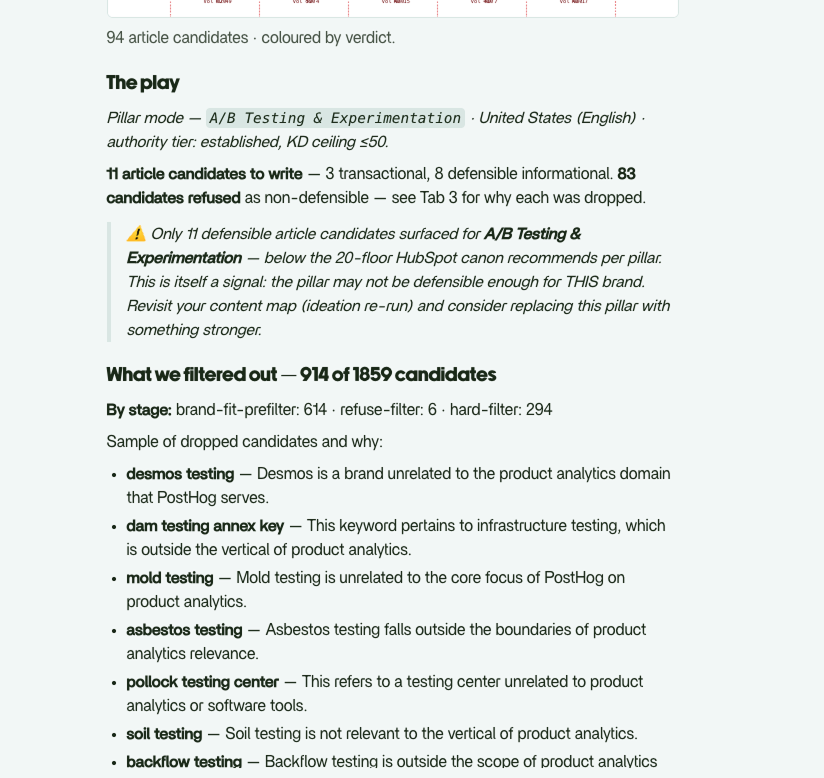
Now run it across your whole roadmap. Go topic by topic and split the list in two: a list of articles that you want to write and a list of articles that you do not want to write. The “do not write” pile is usually bigger than founders expect, and that is good news. Every generic explainer you cut is a week you get back for content that defends itself.
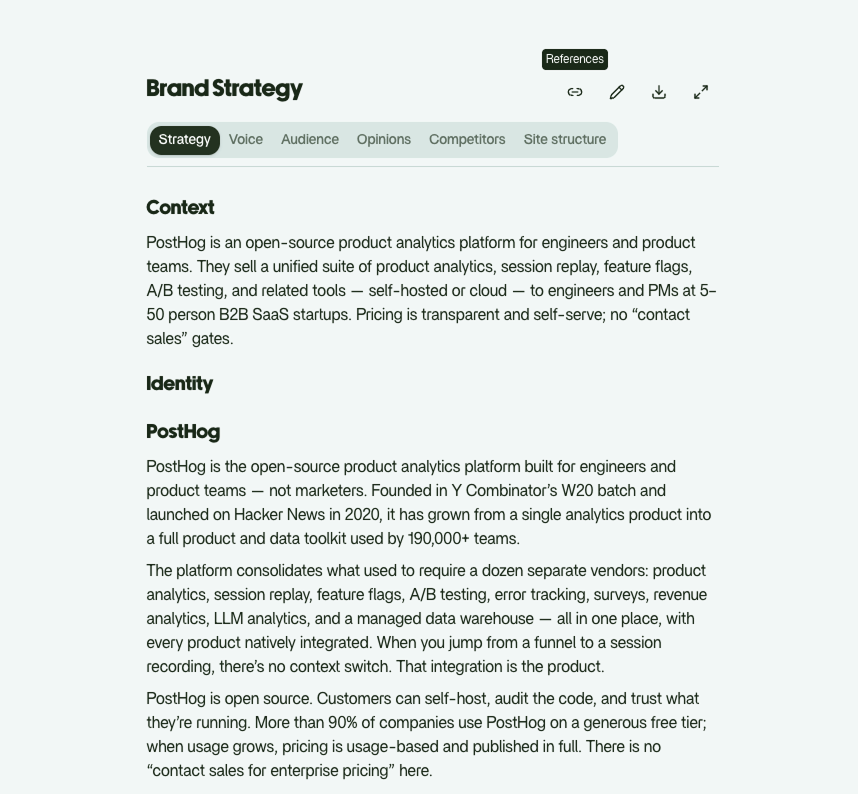
This is also where brand comes in. Start with your brand: the data only you have, the experiences only you lived, the opinions only you hold. Those three things decide which buckets you can actually fill. A founder with strong client results leans into original data. A founder with a sharp take leans into contrarian POV. Once you know what survives the filter, how to structure defensible content shows you how to organize and brief the survivors so each one earns its rank.
The framework does one job. It stops you from writing the articles that were never going to work, and it points your time at the few that will.
Frequently Asked Questions
What are the 4 buckets of content defensibility?
The four buckets are original data, lived experience, contrarian point of view, and transactional content. Each one survives ranking and AI Overviews through a different mechanism, but all four share one trait: a competitor can’t easily copy them, so Google and LLMs have a reason to point at you.
Why do generic ‘what is’ explainers not rank?
AI Overviews extract the answer and show it directly in the results, so the user never needs to click. Google has no reason to rank a page when the answer is already pulled out and displayed. You did the work and the Overview kept the traffic.
Which content types should I avoid writing?
Skip commodity 101 tutorials, generic primers, and listicles with no original data. They get absorbed by AI Overviews or outranked by competitors with more authority on a topic anyone can write. The effort goes in and nothing comes back.
How do I know if my content is defensible?
Ask one question: does it contain original data, lived experience, contrarian reasoning, or transaction context? If it hits one of those, it has a moat and is worth writing. If it hits none, it is not worth the effort, and you should cut it from the roadmap.
This filter is one piece of a larger system. For the full picture of how brand, pillars, and keyword research feed into what you publish, read the comprehensive SEO content strategy guide. The order matters: understand the brand first, then decide which content defends itself, then write.