Tutorial Content ROI: The Defensibility Framework
Tutorial content ROI depends on defensibility. Tutorials that teach original methodology or proprietary processes are defensible and drive topical authority; generic step-by-step tutorials are commodity content absorbed by AI Overviews with zero citations. Measure tutorial ROI by topical authority signals and LLM citations, not vanity metrics like view count. Only defensible tutorials justify investment.
You’re weighing whether tutorial content earns its budget, and the honest answer scares most founders: most of it doesn’t. The problem isn’t production quality. It’s that you’re measuring the wrong thing and making the wrong tutorials. This article gives you a decision rule, drawn from the Reforge defensibility framework, that tells you which tutorials to make and which to never write.
Why Most Tutorial Content Fails to Drive ROI
Here’s the hard truth. A “how to set up X” tutorial that any of your competitors could write from a help-doc gets eaten alive. Google’s AI Overview reads ten versions of the same steps, synthesizes one answer at the top of the page, and sends nobody to your version. You produced the content. The AI Overview captured the value. That’s the trap most teams walk into when they try to avoid AI Overview absorption without first asking whether the tutorial was defensible in the first place.
View count is where the self-deception starts. A tutorial pulls 4,000 views in its first month and leadership nods. Then the traffic curve flattens, the rankings never consolidate, and no other site links to it. Views are a vanity metric. They disappear the moment the initial push fades, and they leave nothing behind: no backlinks, no citations, no authority.
The deeper issue is defensibility. The Reforge 2026 framework sorts content into buckets by whether it can survive at all. Non-defensible commodity content survives nowhere. It doesn’t rank long-term, it doesn’t get cited, and it sends no signal to Google or to LLMs that you know something others don’t. If you do not have a strong opinion or original process inside the tutorial, your content is going to be replaced by AI, because AI can generate the generic version instantly and for free.
The Defensibility Framework: Is Your Tutorial Worth Making?
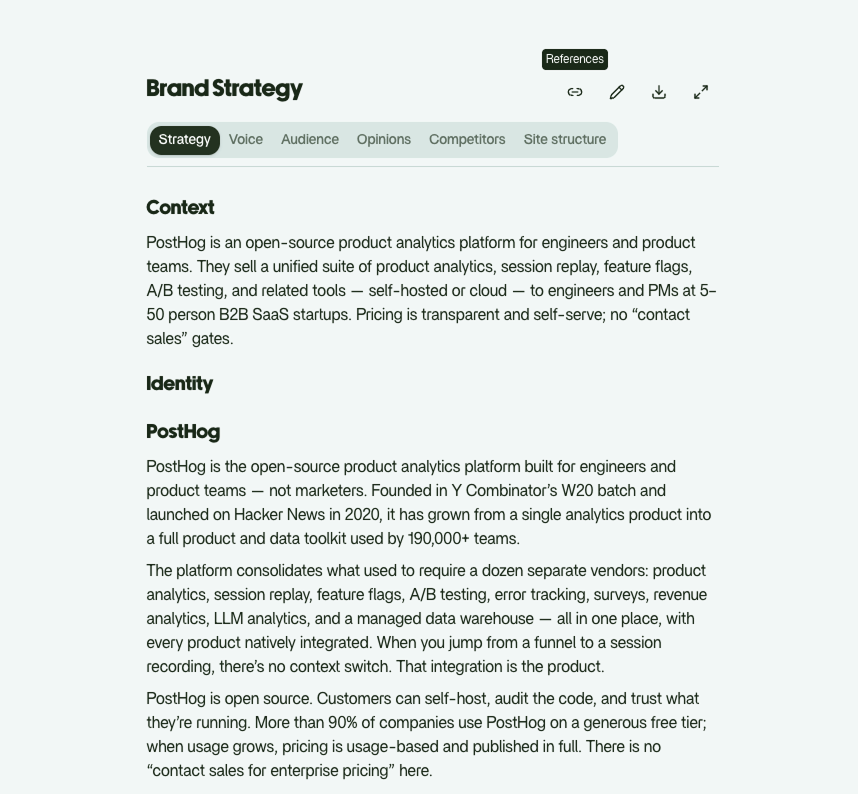
The Reforge model uses four buckets. Two matter for tutorials: defensible content and non-defensible commodity content. Defensible content splits further into defensible-informational (teaching something only you can teach) and defensible-transactional (content tied to a buying decision where your product is the answer). Everything else is commodity, and commodity content is where budgets go to die. If you want to understand how this taxonomy fits inside proven content frameworks, the structure is the same one Andy applies across every content pillar.
A defensible tutorial does one of three things. It teaches original methodology, the framework your own team actually uses. It documents a proprietary process competitors can’t copy because they don’t run it. Or it carries a documented expert point of view, the kind that signals to Google and to LLMs that you are an expert. This is where original expertise as a defensibility signal does the heavy lifting: a named author with real credentials and lived experience is exactly what AI Overviews and Perplexity look for when deciding whom to cite.
A non-defensible tutorial does the opposite. Generic step-by-step. “How to use X tool.” Anything that teaches precisely what every competitor already teaches. The format isn’t the problem. The interchangeability is.
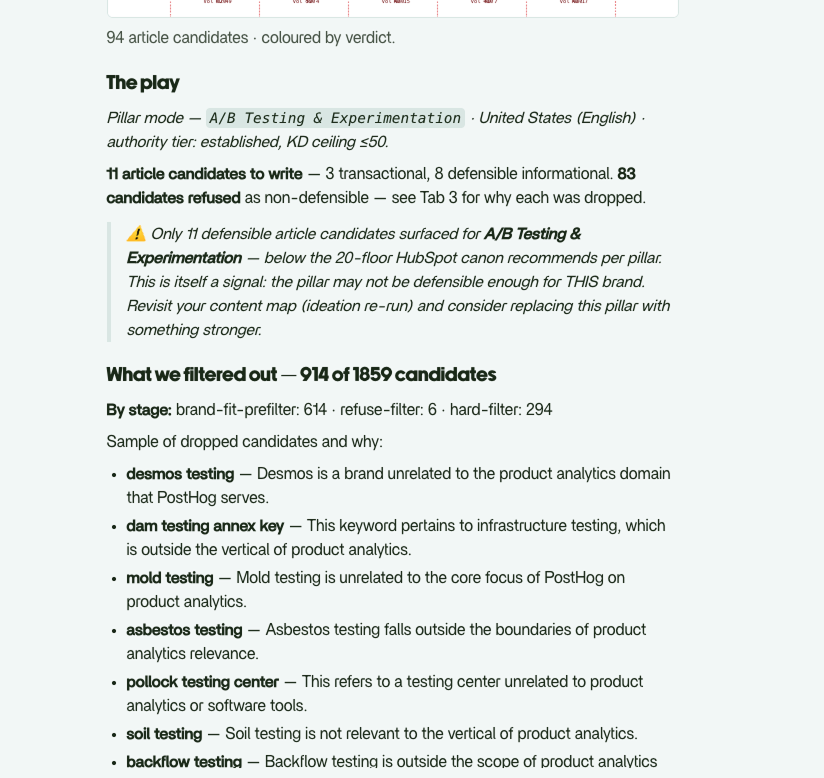
So here’s the decision rule. Ask one question before you greenlight any tutorial: can your competitors teach the same thing from their own experience? If yes, it’s commodity. Don’t make it. If no, because the method is yours and the experience is yours, it’s defensible. Make it. This is the difference between a list of articles that you want to write and a list of articles that you do not want to write.
Measuring Tutorial ROI by Topical Authority, Not Views
If view count is the wrong metric, what’s the right one? Topical authority. A defensible tutorial doesn’t just rank for its own title. It strengthens your whole cluster. You see it in three signals: semantic keyword clustering (the tutorial starts ranking for dozens of related long-tail queries you never explicitly targeted), backlinks from related content, and ranking breadth across the topic rather than a single spike.
The second metric is LLM citations. Ask the blunt question: is your tutorial cited by AI Overviews, Perplexity, or ChatGPT when someone asks about the topic? In 2026 this is the new rank. Most cited sources don’t even appear in Google’s top 20 organic results, which means citation count is now a separate, more valuable scoreboard than position tracking. Generic tutorials are absorbed by AI Overviews with zero citations; only tutorials teaching original methodology drive topical authority and ROI.
Third, watch organic traffic from specific long-tail queries instead of total visitor count. Ten visitors who searched a precise problem your method solves are worth more than a thousand who bounced off a generic headline. The intent is sharper, the conversion is higher, and the ranking is stickier.
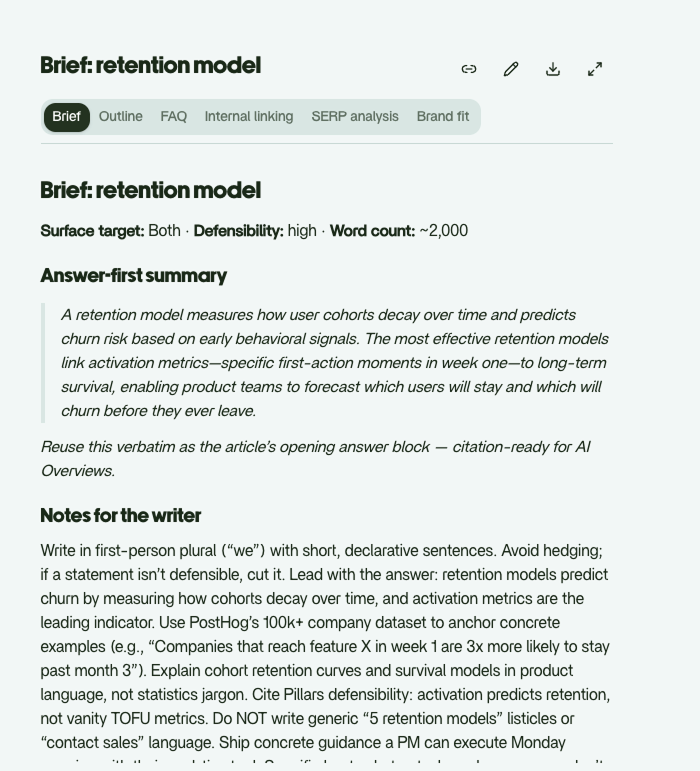
There’s a compounding effect here that view-counting misses entirely. A defensible tutorial drives ranking velocity across the cluster it belongs to. One strong piece pulls its neighbors up. That’s the return: not a single article’s traffic, but the lift across the topical pillar. Andy’s real-time SERP analysis surfaces exactly this, showing which tutorial types pull citations and ranking breadth versus which ones get swallowed by the AI Overview and disappear.
Making Your Tutorial Defensible: The Original Methodology Angle
Start with the method. Document and teach the proprietary process your own team uses, not the textbook version. If your sales team has a 5-step qualification ritual nobody else runs, that’s a defensible tutorial. The generic “how to qualify leads” guide is not. Your content and your strong opinion are the moat. Strip them out and you’re left with the commodity version AI already wrote.
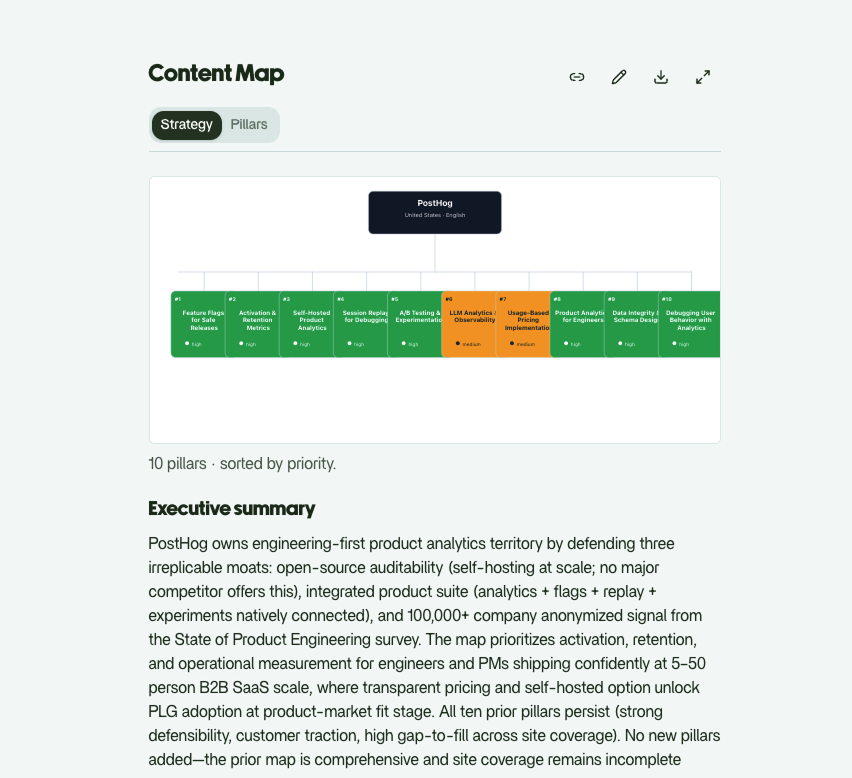
Then build the cluster. A single tutorial floating alone is fragile. Think in clusters and content pillars: surround the tutorial with related pieces that answer adjacent questions, and the whole group signals topical depth. Link to and from the content pillar so the semantic relevance compounds. Each internal link tells Google these pages belong together and that you cover the topic completely, not in one isolated post.
Authorship is the third lever, and it’s the one most teams skip. Credentials matter for citations now. Hire expert authors or put your documented lived experience on the page with a real byline, real proof, and real specifics. “We A/B-tested this onboarding flow across 40 client accounts” beats “experts recommend” every time. Ben spent years applying these defensibility frameworks to client content, and the pattern holds across every account: the tutorials that name an expert and teach a real method get cited; the anonymous generic ones get absorbed.
Put together, defensibility is less about how polished the tutorial looks and more about whether anyone else could have made it. If they could, skip it. If they couldn’t, it becomes a load-bearing piece of your broader content pillar strategy, the kind of asset that earns citations and pulls an entire cluster up the rankings.
FAQ
How do you measure tutorial content ROI?
Measure by topical authority signals and LLM citations, not views. Track semantic keyword clustering, backlinks from related content, ranking breadth across the cluster, and whether AI Overviews or Perplexity cite your tutorial. View count tells you nothing about whether the content survives.
Why do generic tutorials fail to rank?
AI Overviews absorb them and synthesize one answer at the top of the page, sending zero traffic and giving zero citations to any single source. Google rewards original methodology and documented expertise, not interchangeable step-by-step content that ten other sites already published.
What makes a tutorial defensible?
Original methodology, a proprietary process, or a documented expert point of view. The test is simple: if your competitors could teach the same thing from their own experience, it’s non-defensible commodity content and not worth making.
Should you create tutorial content if you’re not an expert?
Only if you have original methodology or genuine first-party experience to teach. Without one of those, you’re producing commodity tutorials that AI Overviews absorb with zero return. In that case the money is better spent elsewhere.