E-E-A-T Content Strategy Examples: How Brand Expertise Shapes Pillar Topics
By Ben — Founder
E-E-A-T content strategy operates at the pillar level, mapping your brand’s actual expertise to content topics. Google’s quality framework (Experience, Expertise, Authoritativeness, Trustworthiness) rewards this alignment through better rankings and LLM citations. The result: coherent, evidence-backed content that signals genuine domain knowledge instead of generic coverage written for search engines.
You already know E-E-A-T matters. What nobody tells you is where it actually starts. It is not the author bio you bolt on after the draft is done, and it is not the backlink you chase next quarter. It starts the moment you pick which topics to write about. Get that decision right and the credibility signals take care of themselves. Get it wrong and no amount of post-production polish saves the page.
What is E-E-A-T at the pillar level?
E-E-A-T stands for Experience, Expertise, Authoritativeness, and Trustworthiness. It is the quality framework Google’s raters use to judge whether a page deserves to rank. Most content teams treat the four letters as a checklist applied after writing: add an author headshot, link to a credential, point a few backlinks at the URL.
That checklist thinking is the mistake. E-E-A-T is not a coat of paint. It is a property of your whole content cluster, and it begins during topic selection.
Here is the difference in practice. A single article can claim expertise. A cluster of eight related articles, each reinforcing the same domain, proves it. When you choose topics that match what your brand genuinely knows, the signals compound across the cluster instead of sitting isolated on one page. Generic content cannot fake this. You can write a polished post on any subject, but five thin posts across five unrelated subjects never read as authority to Google or to an LLM deciding which source to cite. Strategic content on expertise-aligned topics signals naturally, because the architecture itself is doing the work.
E-E-A-T decisions happen during topic selection, not after writing
Topic selection is the moment expertise maps to strategy. This is the part teams skip, and it is the part that decides everything downstream.
Think about it from both ends. If you write about topics outside your expertise, no credibility signal fixes it afterward. The author box, the citations, the schema markup: none of it rescues a page that had nothing real to say in the first place. But if you write about topics where you have genuine depth, the whole cluster compounds authority. Every new article reinforces the last one. Internal links stitch the cluster into a single coherent statement of what your brand knows.
This is exactly why brand interviews and pillar selection come before keyword research. You cannot change what people are typing into Google or ChatGPT. The search intent is fixed. What you control is which slice of that demand you are credible enough to own. Sequence the work the other way and you get isolated articles instead of a strategy. Start with your brand, map the expertise, then go find the keywords that sit inside it.
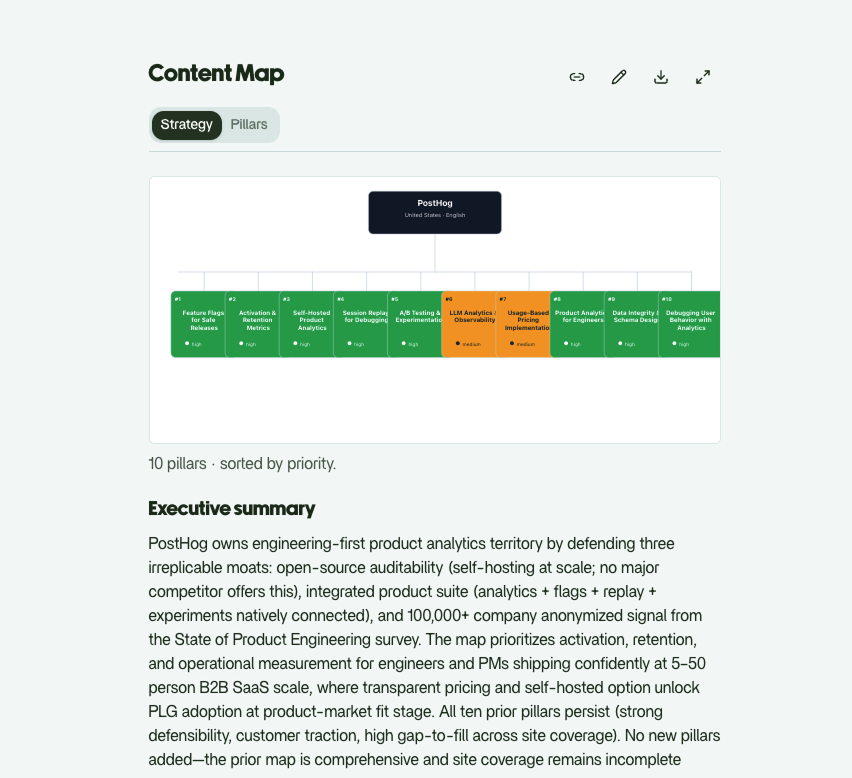
The pillar architecture itself is the E-E-A-T signal. When you select your pillar topics through brand expertise mapping, E-E-A-T signals emerge naturally from the clustered content architecture. That is the whole game. If you want the mechanics of building those clusters, here is how to apply a topical approach across a full content program.
How to map brand expertise to pillar topics
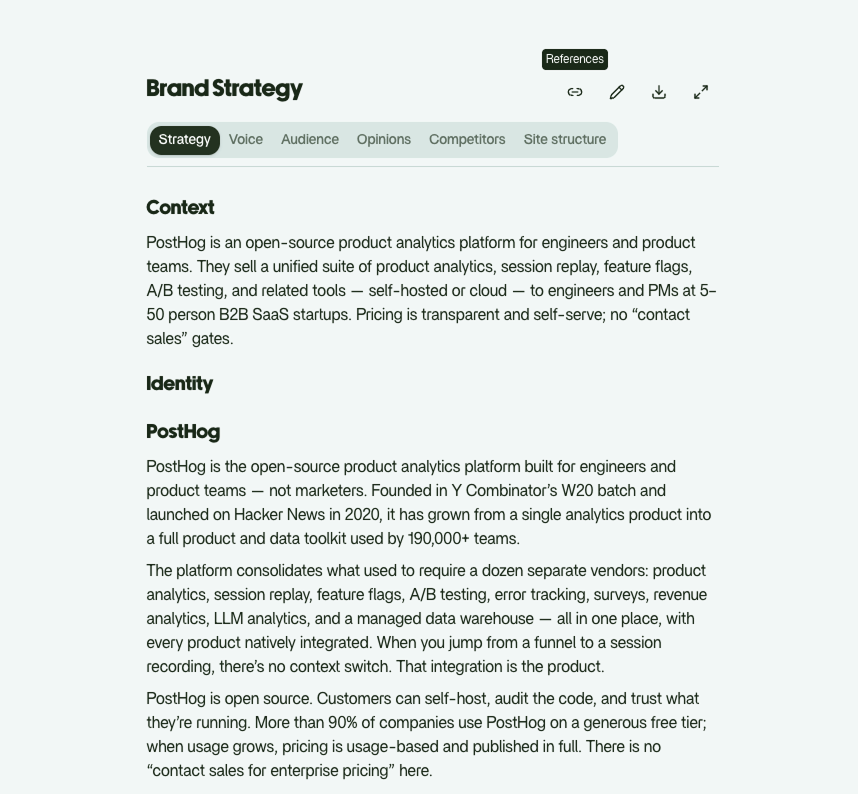
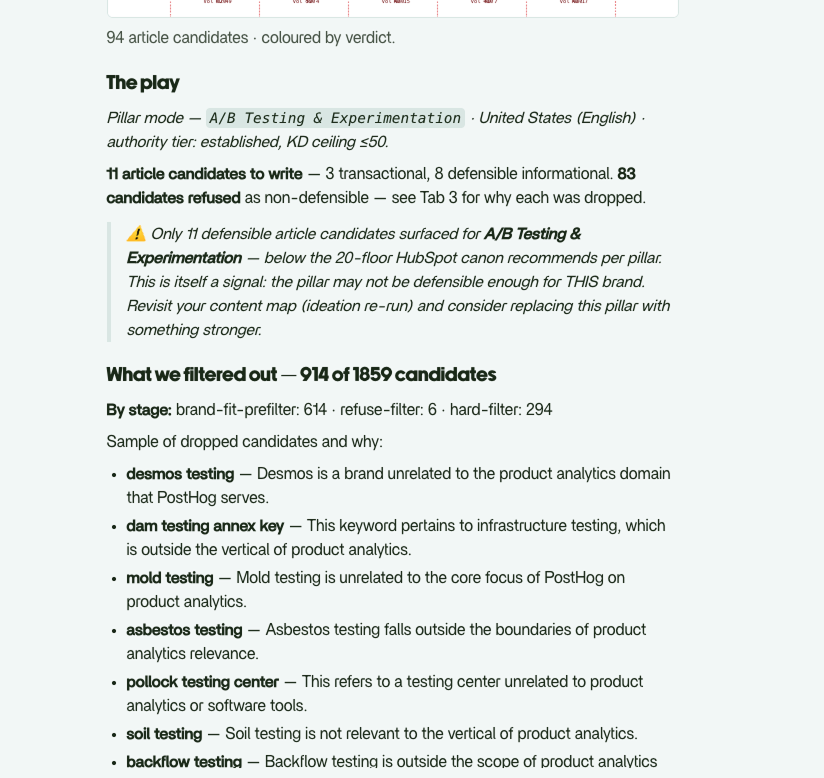
Expertise mapping sounds abstract until you run it as an interview. Andy does this from a live crawl of your website plus an onboarding session, and the goal is blunt: surface what you actually know, not what you wish you knew. The brand interview data and the live SERP data fetched in real time for each keyword research run are the two inputs that keep pillar selection honest. One tells us your real depth. The other tells us what the search results currently reward.
The method runs in a clear order:
- Interview the brand. Pull the real expertise areas out of the founder, the team, and the existing content. Have a very global understanding first of your brand, what it does, and the strong opinion it holds.
- Filter topics against that expertise. Pillar selection keeps the topics where you have genuine depth and rejects the ones where you would be guessing.
- Cluster and connect. The content cluster then compounds these signals through internal linking and a coherent narrative, so every article reinforces the same topical authority.
A concrete example. A B2B SaaS founder whose real expertise is onboarding should not build a pillar on general productivity. That topic is too broad and too far from their proof. Their pillar is retention and customer success, the area where they have shipped real work and can speak from experience. The resulting cluster signals expertise to Google because every article points back to the same hard-won knowledge. For the full decision framework, read this guide to strategic topic selection.
Real examples: E-E-A-T in action across content pillars
Theory is cheap. Here is what pillar-first E-E-A-T looks like in three real shapes. For more patterns, see these real-world content pillar strategy examples.
Example 1: Andy itself. Andy’s expertise is the complete SEO agency workflow: brand strategy, content pillars, keyword research, briefs, articles. So the content architecture is built pillar-first around that exact sequence. Andy does not publish scattered posts on social media tactics or email marketing, because that is not where the depth is. Every article reinforces one claim: this is how SEO strategy actually works in 2026. That focus is the E-E-A-T signal. The brand is not spraying coverage. It is proving one domain, repeatedly.
Example 2: a typical B2B SaaS brand. Take a company whose team has spent three years solving customer onboarding. Pillar selection points them at a retention and customer success cluster: activation flows, churn diagnosis, expansion revenue, success metrics. Eight to ten articles, each grounded in work they have genuinely done. Because the topics sit inside real expertise, the brand can hold a strong opinion in every piece. If you do not have a strong opinion, your content is going to be replaced by AI, because AI can easily generate the generic version. The opinion is what survives.
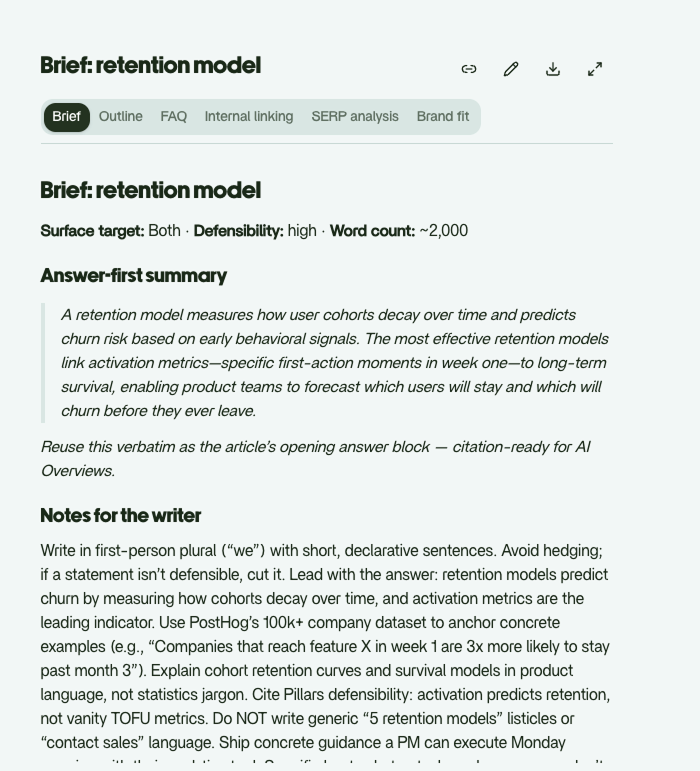
Example 3: how the signals compound. A single retention article might rank on its own. Cluster ten of them with smart internal linking and something better happens. The individual articles rank higher because the domain now reads as authoritative on retention, and the domain authority itself climbs because the cluster proves topical depth. The cluster lifts the pages, and the pages lift the cluster. This is how you think in clusters and content pillars instead of chasing one keyword at a time.
What all three share is the order of operations. Topic selection was the strategic decision. E-E-A-T followed naturally. Nobody bolted credibility onto a finished article, because the credibility was designed into the pillar before a word was written. That is how you signal to Google and to LLMs that you are an expert.
Frequently asked questions
What’s the difference between E-E-A-T and topical authority?
E-E-A-T is Google’s quality signal. Topical authority is the result you get when those signals stack up. Think of E-E-A-T as the ingredient and topical authority as the outcome of clustering expertise-aligned articles. You build the cluster, the cluster earns the authority.
How do you show E-E-A-T if you’re new to a topic?
You don’t. If you lack genuine expertise, pillar selection should reject that topic before you ever write it. E-E-A-T signals come from real domain knowledge, not from fake credibility props added after the fact. Pick the pillar where you have actual depth and write that instead.
Can you apply E-E-A-T to every content type or niche?
E-E-A-T applies to all rankings, and the signals matter most for high-stakes topics like health, finance, and legal, where Google scrutinizes credibility hardest. For other niches the bar is lower, but expertise still drives both rankings and LLM citations. The principle holds everywhere: real knowledge wins.
How do you know if you have enough expertise for a pillar?
Simple test. If you cannot credibly author six to eight related articles in a cluster, that is not your pillar. The brand interview process exists to find where you have genuine depth, so you commit to topics you can defend across an entire cluster rather than a single thin post.
The takeaway is the order, not the polish. E-E-A-T is not a finishing step. It is decided when you choose your pillars, and everything else follows from that one decision. When you map expertise first and cluster around it, the signals build themselves. For the strategic foundation under all of this, start with the comprehensive pillar page framework.