Internal Linking Clusters: Building Topical Authority
Ben, Founder. Years of hands-on SEO building cluster architectures across multiple brands, now the methodology behind Andy.
Internal linking clusters connect a pillar page on a broad topic to multiple cluster pages on subtopics, creating a linking hierarchy that signals topical authority. The pillar links to each cluster; clusters optionally link to related clusters. This structure tells Google and LLMs that your domain owns the topic, not just individual keywords. It’s the tactic for building topical authority in 2026.
Most agencies I talk to already know they should link their articles together. What they get wrong is the shape. They link randomly, post-hoc, hoping Google rewards the effort. It doesn’t work that way. If you run client accounts and you want rankings to move as a group instead of one article at a time, you need a deliberate structure. This guide walks through what that structure is, why it signals expertise, how to build it step by step, and how to measure it. It builds on the same topical authority framework Andy uses for every brand it works on.
What Is an Internal Linking Cluster?
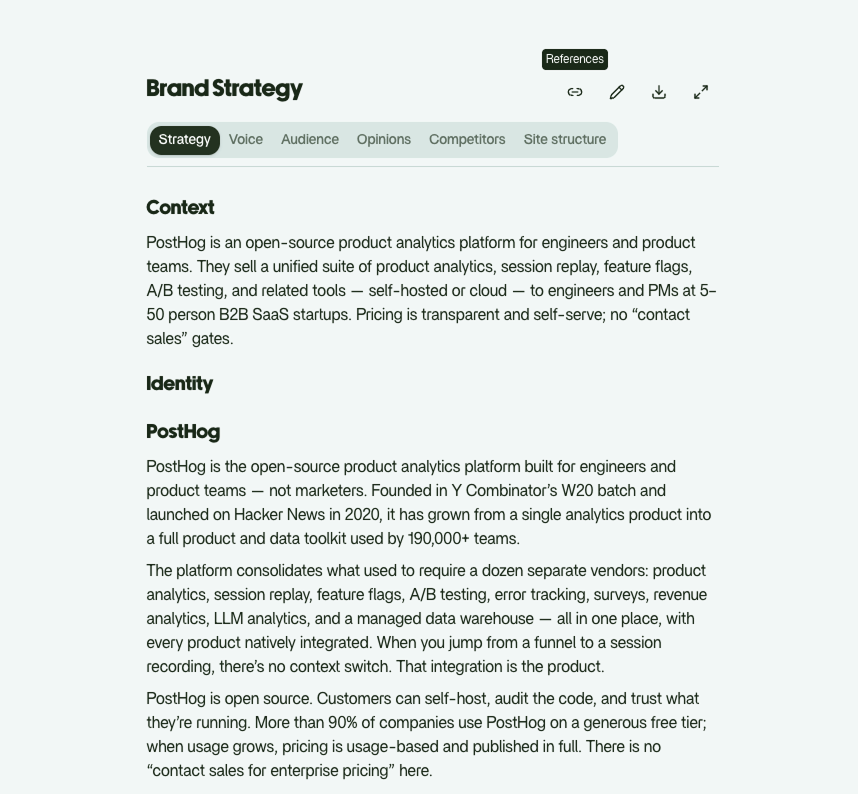
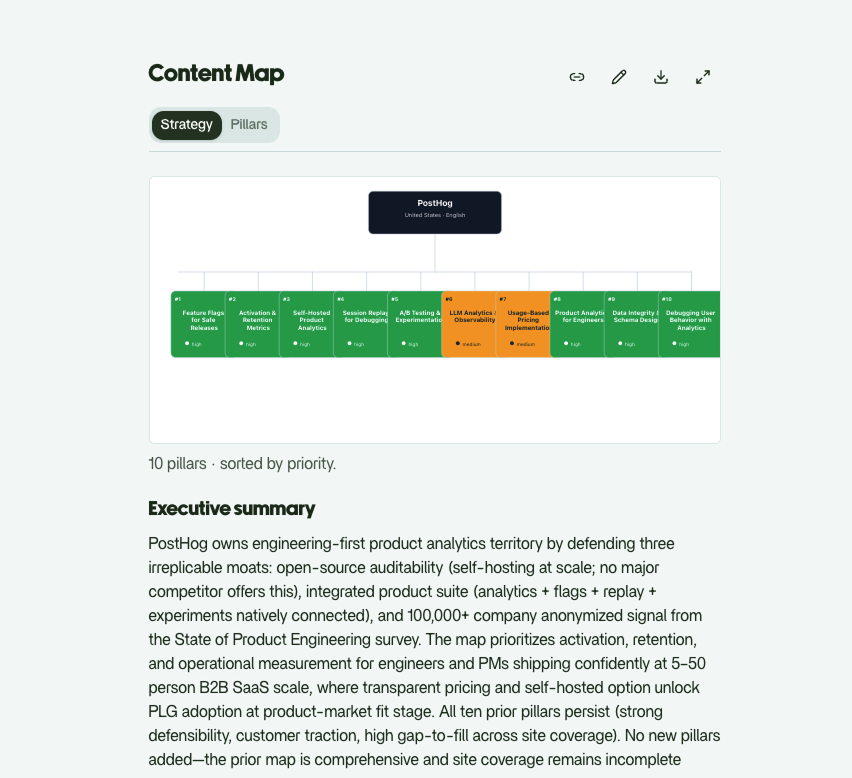
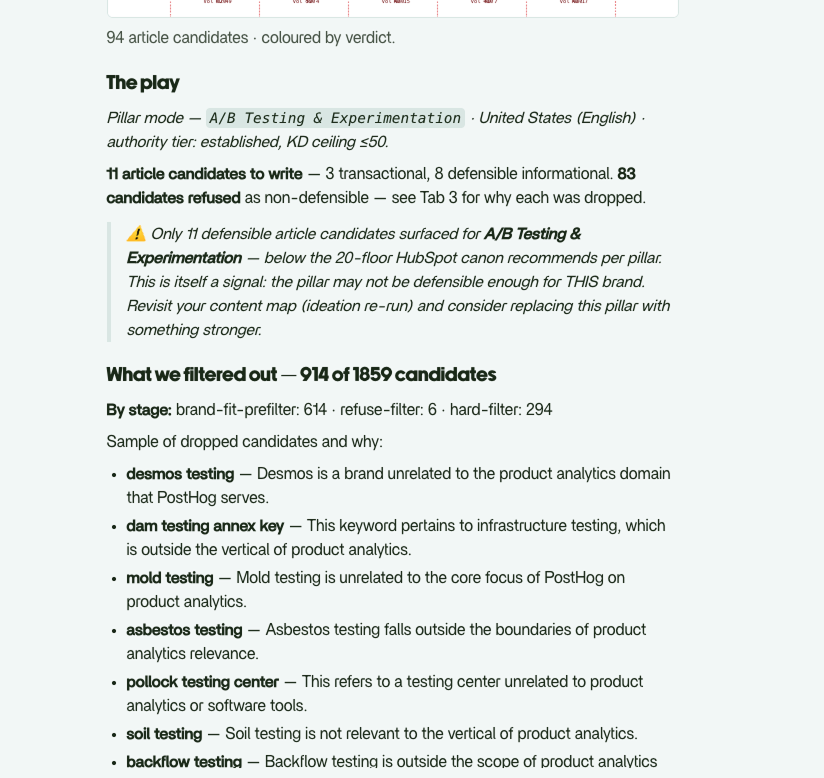
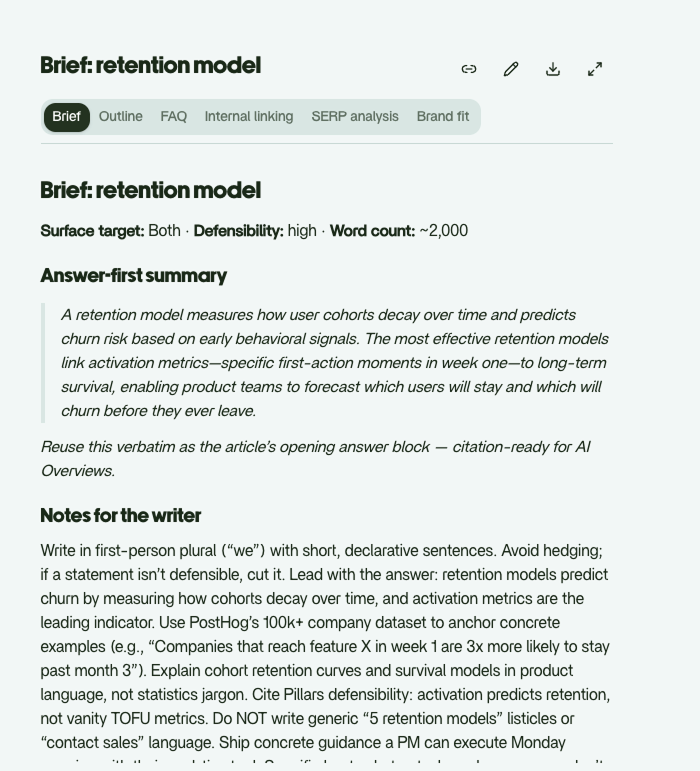
An internal linking cluster is one pillar page on a broad topic, linked to several cluster pages that each cover a specific subtopic. The pillar carries the topical authority. The cluster pages carry the keyword specificity. One holds the territory, the others plant flags inside it.
Picture a pillar called “internal linking clusters in seo.” Around it sit clusters: pillar page internal linking, content cluster internal linking, topic cluster linking strategy. The pillar links down to each. Each cluster links back up. That is the whole shape.
Compare that to how people did it in 2016. Back then you wrote standalone articles, stuffed each one with its exact-match keyword, and treated every page as an island. That approach is dead. A single article with a strong opinion still gets absorbed if nothing around it proves you own the subject. The cluster gives search engines semantic coherence: a set of pages that reference each other and clearly belong to the same domain of knowledge. That coherence is the signal. This is why I tell every founder to think in clusters and content pillars before writing a word.
For the full blueprint, read how to structure a pillar and cluster system.
How the Linking Hierarchy Signals Topical Authority
Here is the part most guides skip. The links are not a courtesy to readers. They are evidence. Internal linking hierarchy (pillar to cluster to subtopic) is the structural tactic Google uses to recognize domain ownership over a topic, not just individual keywords.
Read that again, because it changes how you build. Google reads the pillar as the topical context. It reads each cluster as keyword-level relevance. Put together, the structure says: this domain has covered the subject from the top down, in an organized way, with internal references that hold up. That reads as expertise. One ranking keyword is a coincidence. Fifteen connected pages ranking together is a pattern, and patterns are what algorithms trust.
LLMs work the same way now, and that is the 2026 difference. AI Overviews and tools like Google Extended pull from sources that demonstrate breadth, and the link structure is one of the signals they use to gauge it. LLM citations are the new rank. Most cited sources don’t even crack Google’s top 20. A clean cluster is how you signal to Google and to LLMs that you are an expert, in a way a lone article never can.
This matters more now than it did a decade ago for one reason. If you do not have a strong opinion, your content is going to be replaced by AI, because AI can generate generic content in seconds. The cluster is what makes your opinion defensible at the domain level. The methodology here synthesizes Backlinko’s topic cluster work and Reforge’s 2026 topical authority framework, the two most rigorous public frameworks on how SEO actually works now.
Building Your Internal Linking Cluster Structure
This is the step-by-step. I have built this across multiple brands, and the order matters more than any single tactic.
Step 1: Identify the pillar topic. Pick something broad enough to span 5 to 15 cluster pages, but not so broad it covers your whole industry. “Internal linking clusters” works. “SEO” does not. The test: can you name at least five real subtopics a smart reader would expect under it? If yes, you have a pillar.
Step 2: Group related keywords into clusters. This is where most people stumble, and it is the exact challenge agencies bring to me: which keywords belong in the same cluster and which belong in a separate one. Group by semantic cohesion, not search volume. Two high-volume keywords that answer different intents belong in different clusters. Everything starts with the search intent and the keyword the user typed in Google or ChatGPT. You cannot change what people are typing. You can only group your pages around it.
Step 3: Create the cluster pages and link from the pillar to each one. The pillar links to every cluster, usually once, in the intro or the summary where it reads naturally. Use descriptive anchor text. Not “click here.” Not the bare keyword repeated. Something like “how to group keywords into clusters” pointing at the cluster page on that exact subtopic. The anchor tells Google what the destination is about. Waste it and you waste the signal.
Step 4: Link between related clusters, but only when it is contextually relevant. If your cluster on anchor text genuinely helps a reader on your cluster about measuring clusters, link them. If the connection is a stretch, skip it. Forced links dilute the structure.
A few mistakes I see on client audits constantly. Over-linking: twelve internal links crammed into one paragraph reads as manipulation, not help. Footer links treated as content signals: a sitewide footer link is not the same as a contextual in-body link, and Google knows the difference. Mismatched keyword groupings: clusters built around volume instead of intent, so the pages compete with each other instead of supporting the pillar.
Once the structure is live, the work shifts to scaling it. See cluster strategy implementation for running this across multiple pillars at once.
Measuring Internal Linking Cluster Performance
You built it. Now prove it moved something. Vanity traffic is not the metric here. The metric is whether the cluster rose as a unit.
Track the pillar keyword and every cluster keyword together. Did they climb in the same window? A cluster working correctly lifts the group, not one page. If the pillar jumped and the clusters sat still, your internal links are probably weak or your groupings are off.
Watch for SERP lift on the pillar. A strong sign: your pillar page starts ranking for cluster keywords it does not even target directly. That is Google reading the hierarchy and crediting the pillar with the topical context underneath it. When Andy runs keyword research, it pulls live SERP data in real time for each run, so you can see how clusters are reshaping rankings instead of guessing weeks later.
Then look at behavior. Are users clicking from the pillar into the clusters? That click pattern confirms the hierarchy is doing its job for humans, not only crawlers. Finally, measure the breadth: how many distinct keywords on this topic now rank from your domain? Breadth is the clearest proxy for domain ownership. More on the specific signals to watch in measuring topical authority.
One honest note. Branded search volume and LLM citation count matter more than raw traffic in 2026. If your cluster is working, people start searching your brand alongside the topic, and AI tools start naming you. Track those. They lag, but they are the real prize.
FAQ
What is the relationship between internal linking and content clusters?
Internal linking is the connective tissue. A content cluster without internal links is just a folder of articles that happen to sit near each other. The links are what make Google read them as one organized body of work instead of isolated pages. No links, no cluster, only scattered articles.
How do you link from pillar pages to cluster pages?
Link from the pillar to each cluster once, usually in the intro or the summary, using descriptive anchor text that names the subtopic. Skip footer links and reciprocal link blocks. One clean contextual link inside the body carries far more weight than a sitewide link in a template.
Should cluster pages link back to the pillar page?
Yes. Each cluster article should link back up to the pillar once, with anchor text that points to the broad topic. That return link closes the loop and reinforces the hierarchy in both directions. It tells Google the cluster knows which pillar it belongs to.
How does internal linking in clusters affect SEO rankings?
Google reads the linked structure as topical coherence, which lifts the pillar and the cluster pages together rather than one at a time. The hierarchy signals domain authority over the whole topic. That is why a well-built cluster moves rankings as a group, and why a pile of unlinked articles does not.