How to Create a Cluster Content Outline: Real Keyword Examples
By Ben, Founder
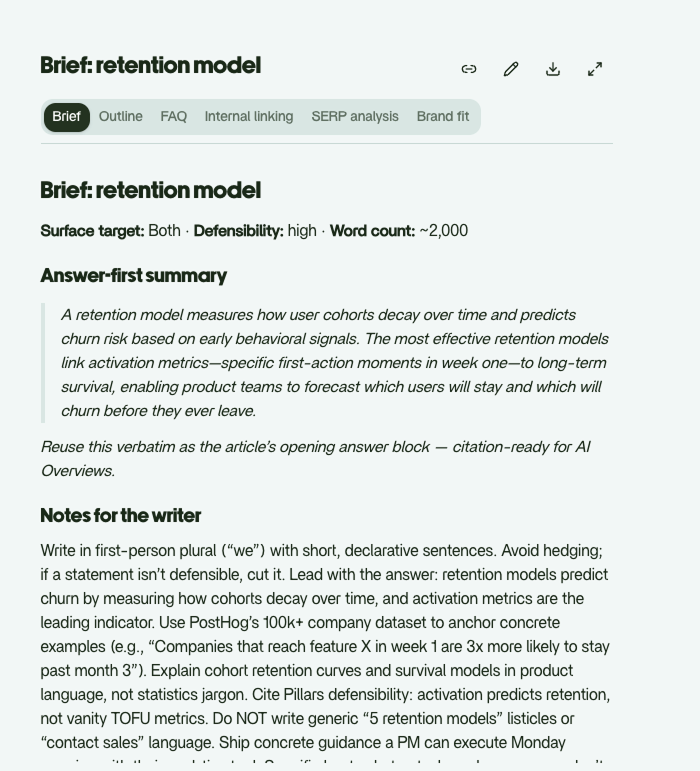
A cluster content outline maps a pillar page and supporting articles to keyword intent and competitiveness. Build it by starting with the pillar keyword and primary audience need, then layering subtopic keywords by search intent and competitive landscape. Real cluster outlines show how keyword research data (volume, difficulty, searcher intent) drives the structure of each section, not generic templates.
If you run content for multiple clients, you know the trap. You need cluster outlines fast, so you reach for a template, fill in the blanks, and ship something that looks strategic but isn’t tied to a single real search query. Clients can tell. This article does the opposite: three real cluster outlines, each annotated with the keyword data that justified every section. For the wider discipline these outlines sit inside, understand the broader cluster strategy framework.
What a Cluster Content Outline Is (And Why It Differs from Templates)
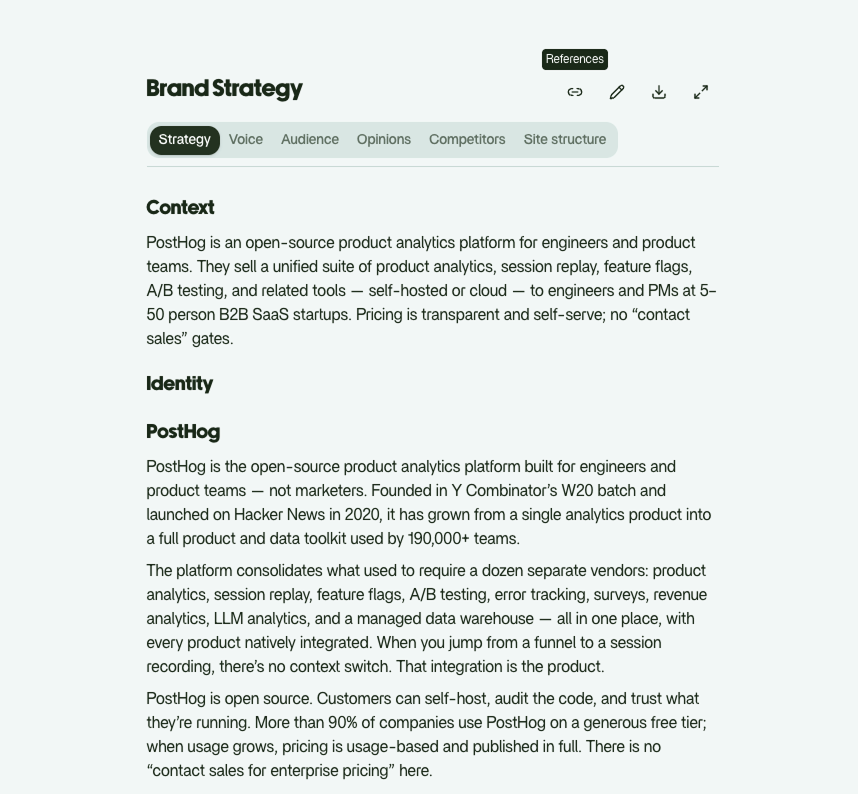
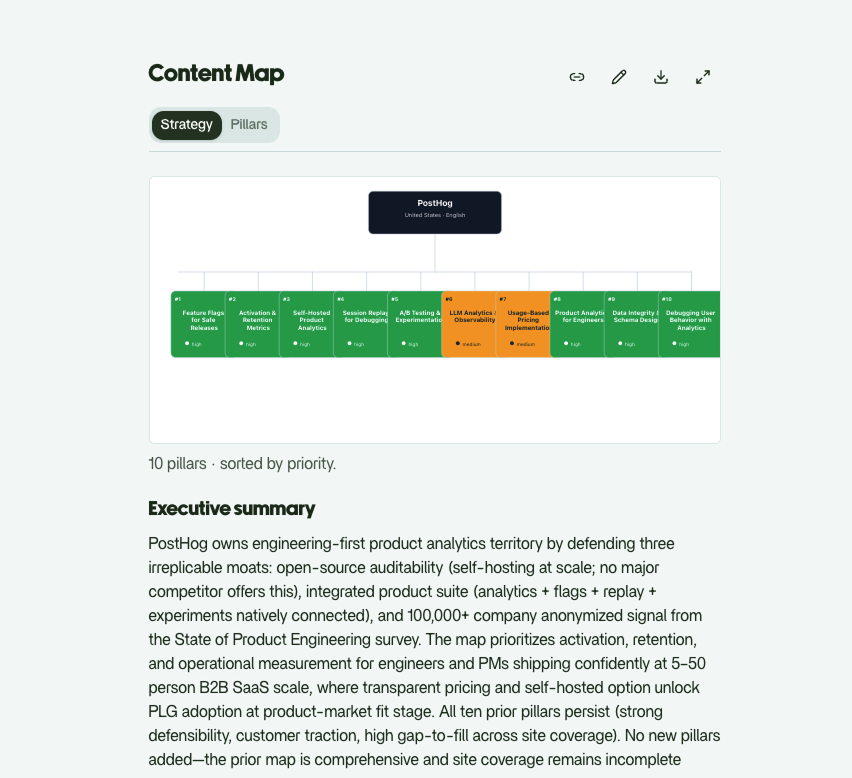
A cluster content outline maps the pillar page and its supporting articles to specific keywords, organized by search intent and volume. The pillar targets the broad topic. The cluster pages target intent-specific subtopics underneath it.
Here is the difference between this and a template. A template gives you boxes. A real outline gives you reasons. Every section exists because there is a real search query behind it, with a volume number and a known competitive field. No query, no section.
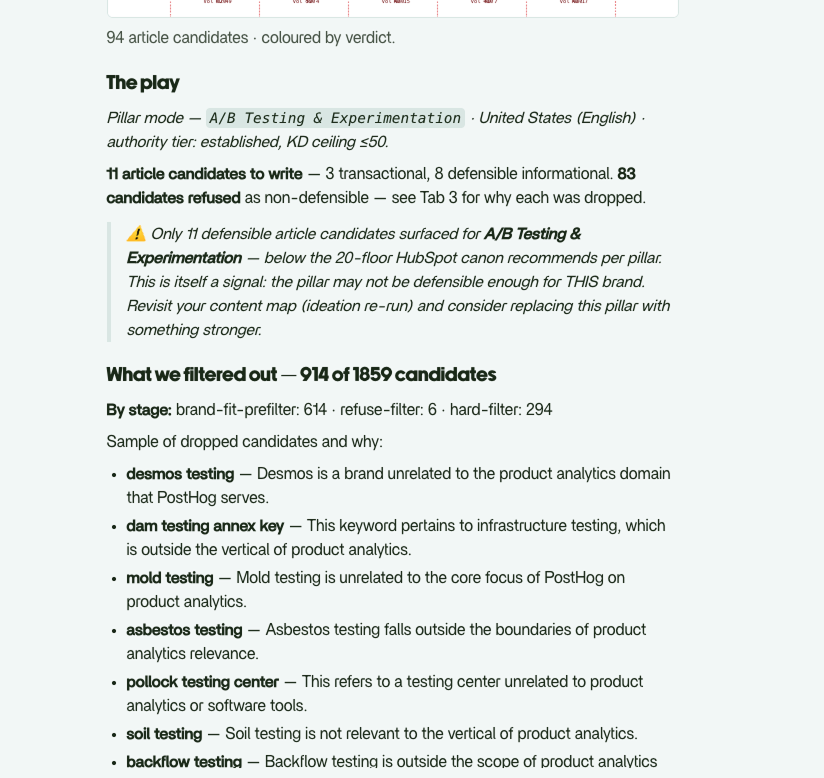
Andy builds these outlines from live SERP data fetched in real time for each keyword research run: volume, difficulty, and search intent for every term. That data is the whole point. It tells you why this keyword is good or why this keyword is not good before you commit a single section to the outline.
Structure also drives your internal links. Cluster pages link back to the pillar. That link pattern is how you signal to Google and to LLMs that you are an expert on the full topic, not just one slice of it.
Example 1: SaaS Product Onboarding Cluster
Pillar keyword: “SaaS onboarding,” 12K monthly searches. The pillar article targets new user adoption end to end.
The supporting keywords split cleanly by intent. Feature-focused queries like “onboarding checklist.” ROI-focused queries like “onboarding time-to-value.” Pain-focused queries like “onboarding best practices.” Three intents, three families of articles.
Volume decides depth. The highest-volume queries earn two or three dedicated sections inside the pillar. The niche queries get their own supporting articles instead of crowding the pillar. That is the rule: big volume goes deep, small volume goes wide.
Why does this hold together? Because the outline follows the reader’s actual journey. Why we onboard. How we onboard. What problems show up. Each stage is a search someone is really typing.
The linking pattern is simple. Every cluster page links back to the pillar. Cluster pages cross-link each other only where intent overlaps, like the checklist article pointing to the best-practices article. Explore more real cluster outline examples to see how this shifts across other SaaS topics.
Example 2: E-Commerce Product Category Cluster
E-commerce changes the math. Now you are dealing with 100K+ search queries and a far more crowded competitive field. The structure has to follow the buying journey: awareness (“best [product] for”), comparison (“[product] vs.”), and decision (“where to buy”).
The traffic is not spread evenly. Comparison and buying keywords pull far more concentrated volume than awareness keywords. So the outline puts comparison sections first and gives them the most room. You build the outline around where the demand actually sits.
Competition sets the depth. If five sites already rank for “best [product],” your cluster needs harder differentiation than if only two rank. That means more sections, sharper angles, and a clear reason a reader picks you over the five incumbents. The SERP tells you how hard you have to work.
This is why the e-commerce outline looks nothing like the SaaS one. SaaS structures around the adoption journey. E-commerce structures around the buying journey. Short awareness content feeds the top. Long comparative content closes the decision. The outline mirrors that split section by section.
Example 3: B2B Service / Consulting Cluster
B2B services run low volume and high specificity, roughly 5K to 25K searches across the cluster. Fewer people search, but the ones who do are closer to a real decision. So the outline shifts from transaction to authority: methodology sections, case studies, thought leadership.
The keywords cluster differently here. Instead of “buy [service],” you get “how [consulting firm] does [service].” Expertise-signaling subtopics replace transactional ones. People want proof you know the work before they ever talk to you.
The structure follows a trust-building journey. Problem awareness first. Methodology education next. Proof through case studies after that. Then the decision: why us. That sequence answers the questions a skeptical buyer asks in order.
Internal linking here favors depth over breadth. Fewer articles, deeper treatment per article. The outline backs that with longer sections per topic instead of many thin ones. Long-tail keywords do real work too. A narrow term like “[service] for [industry]” has enough specific intent behind it to justify its own section. This is your content and your strong opinion, applied to a niche where genuine expertise still wins.
How to Build Your Own Cluster Outline from Keyword Research
Everything starts by the search intent. You cannot change what people are typing, so you build the outline around the queries that already exist. Here is the sequence I use across client accounts.
- Keyword research and volume mapping. Pull the pillar keyword and every related keyword, each with its search volume and difficulty. This is the raw material. Without it you are guessing, and guessing is how you get a generic outline that never ranks.
- Intent segmentation. Tag every keyword by intent: informational (how-to), navigational (brand), commercial (buy), or transactional (do this now). Group the keywords into those buckets. The buckets become the spine of your outline.
- Outline structure. Create a section for every major intent segment. Prioritize by volume. High-volume intents earn more sections and deeper treatment; small ones get a single supporting article. The structure should reflect where demand actually concentrates, not where you assume it does.
- Competitive landscape validation. Check the SERP for each proposed section. Do top-ranking pages confirm the intent is real? If nobody ranks for it, you have two choices: cut the section, or commit to being genuinely better than what exists. Do not write a section that no search query supports.
- Iterate and refine. Link every cluster page back to the pillar. Cross-link pages where intent overlaps. Then check the outline against your full keyword list and confirm it covers the major questions your audience asks. For the mechanics of the link structure itself, see how to link your cluster pages together.
Hold onto the core principle through all five steps. Real cluster outlines map keyword research directly to structure: each section answers a specific search question, justified by volume, intent, or competitive positioning. That is the line between a strategy and a template.
This is how you think in clusters and content pillars at scale, across every client account, without losing the strategic depth that makes the work defensible. Building outlines this way is one piece of building topical authority, the larger goal every cluster feeds.
FAQ
How do you create a content cluster from scratch?
Start with keyword research. Identify the pillar topic and its primary keyword. Segment your supporting keywords by search intent: problem-solving, informational, comparison, and buying. Then map each intent segment to its own outline section so every section answers a real query.
What should a cluster content outline include?
Each section should answer a specific search query your audience is typing. Justify every inclusion with search volume and competitive data. Organize the sections by audience journey: awareness, consideration, decision. Internal links should connect every cluster page back to the pillar.
Can you show me a real example of a topic cluster outline?
Yes. This article walks through three real cluster outlines: SaaS onboarding, e-commerce product category, and B2B services. Each one is annotated with the keyword data, volume, intent, and competition that drove where each section sits and how deep it goes.
How do you decide which sections to include in a cluster outline?
Include a section for every major keyword cluster in your research. Use search volume and intent to set priority. Use the competitive landscape to set depth. Cut any section that does not match a real search query your audience is asking.