Viewpoint-Based Content Beats Content-Based Explainers in SEO
Ben — Founder
Viewpoint-based content (opinionated, branded writing that reflects your unique perspective) ranks longer and generates more LLM citations than content-based explainers. As AI commoditizes generic information, Google increasingly rewards articles that take a clear stance. This is why the best SEO strategy for brands competing against AI-generated content is to double down on opinion, not retreat into safer generic writing.
You’re a founder watching AI-generated articles flood your category. Writing yet another “what is X” piece feels pointless, but taking a stance feels risky. I want to settle that fear: the stance is the safer bet. The content that survives in 2026 is content with a point of view, and that view is also how you build topical authority through pillar pages. Here’s why, and how to do it.
Why Generic Content Loses to Opinionated Writing
A content-based explainer and an AI-generated article are the same thing. If your page only states what something is, a language model already wrote that paragraph a million times. There is nothing for Google to prefer about your version. Nothing for a reader to remember either.
Generic “what is X” articles meet one of two fates now. Either an AI Overview absorbs the answer and the user never clicks, or your page competes head-to-head with an LLM that responds faster and for free. You lose both matchups.
Google rewards E-E-A-T: experience, expertise, authoritativeness, trust. Those signals do not come from definitions. They come from opinion. When you say “this is wrong and here’s the reason,” you prove a human practitioner stood behind the page. Commodity content has zero defensibility. If you do not have a strong opinion, your content is going to be replaced by AI, because AI can easily create and generate content. That sentence is the whole argument.
The Difference Between Content-Based and Viewpoint-Based Writing
Content-based writing explains what something is. Viewpoint-based writing explains why it matters to your brand. The first is substitutable. The second is not. That gap is the difference between a page that disappears and a page that compounds, and it maps closely to how content and concept differ in SEO.
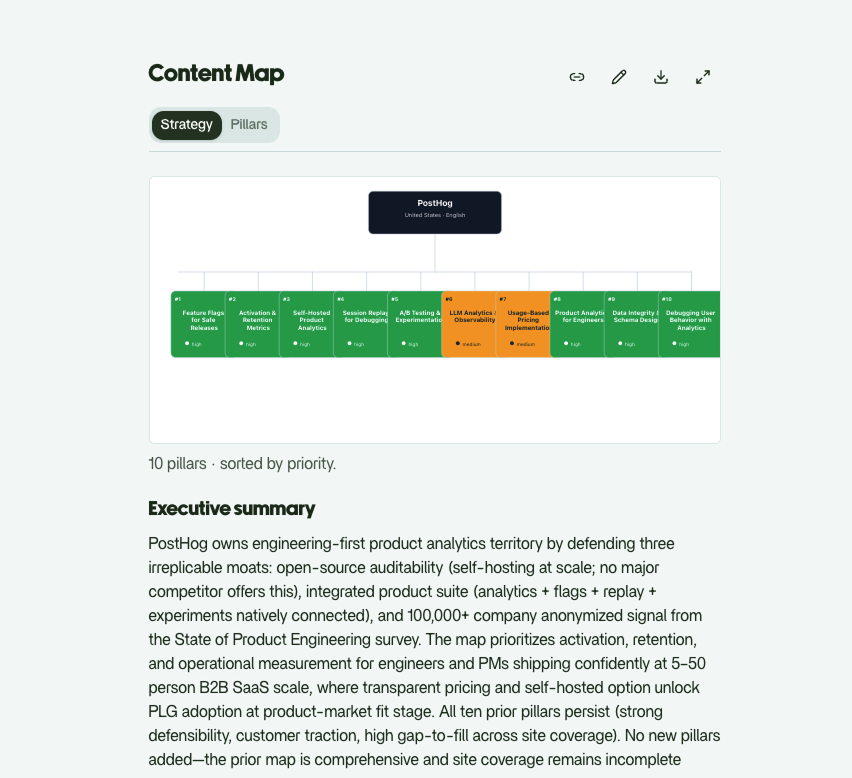
Take a single topic: pillar pages. Content-based writing tells the reader what a pillar page is, how many words it has, where to put internal links. Useful, forgettable, already written. Viewpoint-based writing argues that pillar pages are the foundation of topical authority, that thinking in clusters and content pillars is the only way to signal expertise to Google and to LLMs, and that skipping the pillar means your articles are isolated work with no strategy behind them.
See the move? Same subject. One states facts. The other takes a position you can disagree with. Your methodology, your experience, and your philosophy are what turn a definition into a viewpoint. That is the part AI cannot copy, because it does not have your scars.
How Viewpoint-Based Content Generates More LLM Citations
Here is the line worth pinning to your wall. Opinionated, viewpoint-driven content ranks longer and generates more LLM citations than generic, commodity-based explainers. Both halves of that matter, and the citation half is the one most founders miss.
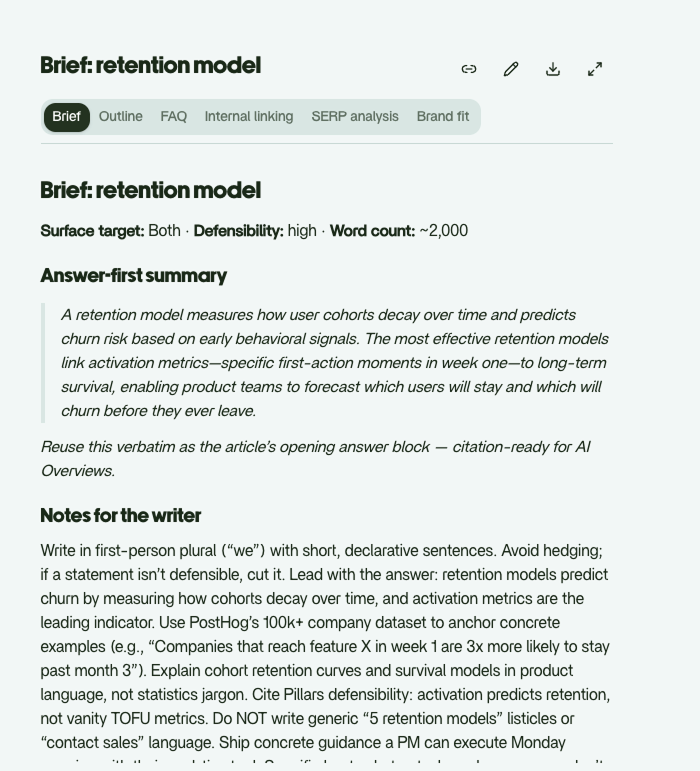
Language models do not cite definitions. A definition has no author. But an attributed claim, a named framework, a stance backed by experience, that gets cited as “according to [brand].” When you say something specific and own it, you give the model a reason to point at you by name. Generic explainers get swallowed into the AI Overview with no attribution. Opinionated frameworks get quoted.
This is why LLM citations are the new rank. Most cited sources do not even crack Google’s top 20. Citation-readiness comes from two things together: a unique perspective and the brand authority to back it, which is exactly E-E-A-T signals through branded authority in practice. Andy’s own workflow runs every brand through a pillar-selection process, and the first-party data from that shows the same pattern again and again. The pillars tied to a real brand opinion are the ones that get pulled into AI answers. The neutral ones sit untouched.
Building Your Brand’s Viewpoint-Based Content Strategy
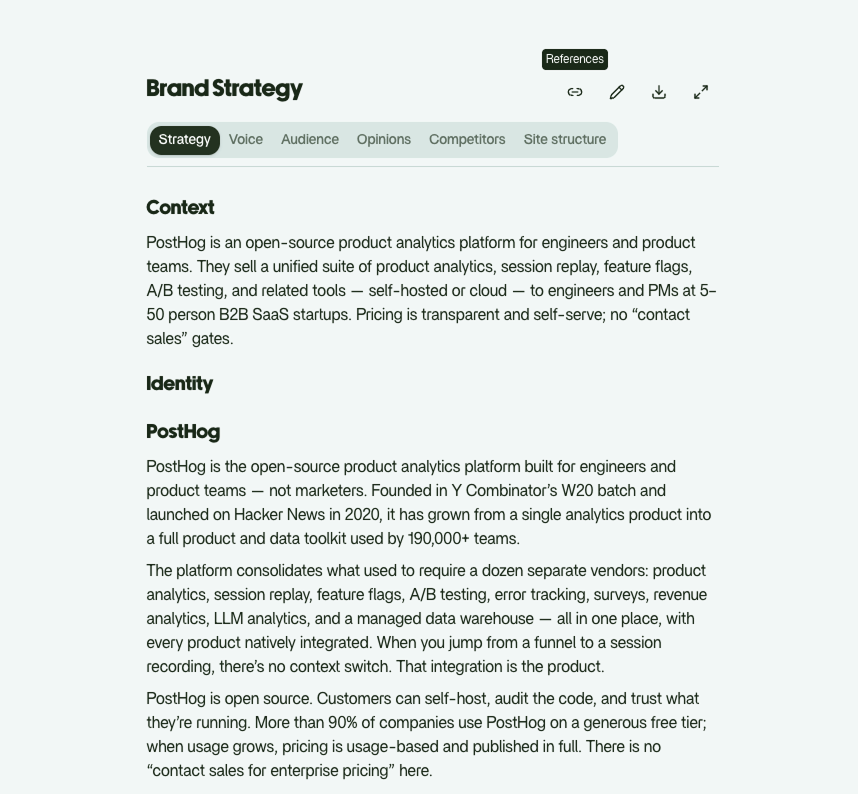
Start with your brand. Not with a keyword tool, not with a list of trending topics. Have a very strong understanding of your brand, what you believe in, and what your strong opinion is. Everything downstream depends on getting this part right first.
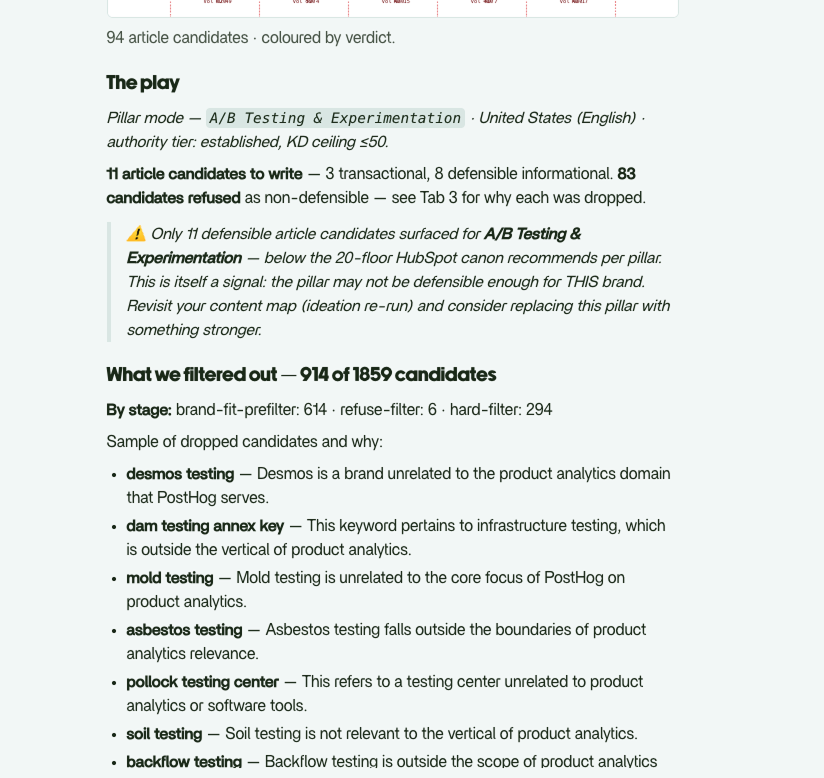
Then filter every article through your methodology. Before you write, ask one question: what view does my brand have that competitors don’t? Start there. If the answer is “nothing, it’s a standard explainer,” that is a signal to either add your angle or skip the piece entirely. A real strategy produces a list of articles that you want to write and a list of articles that you do not want to write. Most teams only build the first list. The second one protects you from wasting months on commodity pages.
Structure matters too. Your opinionated pillar sits at the center, and supporting articles point back to it, which is the hub-and-spoke content architecture that tells search engines you own the topic. Link your cluster articles to the pillar. This is how you signal to Google and to LLMs that you are an expert, not a tourist passing through the subject.
The reason this works for a small brand is simple. You cannot out-generic the internet. There is always a bigger site with more pages. But you can own a viewpoint that no one else holds, and a viewpoint does not care how big your domain is.
When Content-Based Writing Still Makes Sense
I am not telling you to never explain anything. Content-based writing earns its place in a few spots. The mistake is treating it as the whole strategy instead of a supporting layer.
Transactional content qualifies. A how-to, product documentation, a setup guide. The user wants the steps, not your philosophy, and forcing opinion there is annoying. Cluster articles qualify too, the spokes that support an opinionated pillar and answer a narrow question a reader brought to the page. And genuine beginner education has a role when your audience is new to the category and needs the basics before your argument lands.
The rule that holds across all of them: always layer your viewpoint on top of the content-based explanation. Explain the steps, then say which step most people get wrong and why. Give the definition, then give your take on it. Even a documentation page can carry your brand’s fingerprint in how you frame the problem. The explanation gets the click. Your content and your strong opinion is what makes the reader, and the model, remember who said it.
FAQ
Why does opinionated content rank better than generic explainers?
Google rewards E-E-A-T signals. Opinionated content proves real expertise and authority because a person had to stand behind the claim. Generic commodity content is interchangeable with AI-generated alternatives, so there is no reason for Google to prefer your version of it.
Isn’t generic content safer for SEO?
No, it’s the riskier choice now. Generic content gets absorbed by AI Overviews or competes directly with LLM outputs that answer faster and for free. Opinionated content is defensible because it reflects a unique brand perspective that no model can reproduce.
Can small brands compete with opinionated content?
Yes, and it is your single biggest advantage. You cannot out-generic the entire internet, because someone always has more pages and more budget. But you can own a viewpoint, and a strong opinion does not depend on the size of your domain.
How do I know if my content is viewpoint-based or just content-based?
Ask what the article does. Content-based writing explains what something is. Viewpoint-based writing explains why it matters to your brand and your audience, backed by your methodology or your experience. If a competitor could publish your page word for word without anyone noticing, it’s content-based.
Does viewpoint-based content work for non-opinion industries?
Yes. Even technical or transactional content becomes viewpoint-based once you filter it through your brand’s methodology, experience, or philosophy. The facts stay the same. What changes is the angle you bring to them, which step you flag as the costly one, and the reasoning only your experience can supply.