By Ben, Founder
How to Hire and Evaluate Freelance Briefing Content Writers
A freelance briefing content writer produces the strategy document that tells a writer what to cover, how to structure it, and why the keyword is worth targeting. The best brief writers combine SEO knowledge with editorial judgment: they classify search intent correctly, identify content gaps in competing pages, and write briefs tight enough to prevent revision cycles. Brief quality is the single biggest variable between an article that ranks and one that doesn’t.
I have hired brief writers before, and I have wasted money doing it without a real framework. You delegate brief production to free up billable hours, then the article comes back off-target and you cannot tell whether the writer failed or the brief did. This piece gives you a hiring and testing system you can use on your next candidate, built from the brief workflow I refined across dozens of client projects.
What a freelance briefing content writer actually does
A brief writer and a content writer are two different jobs. The content writer turns instructions into prose. The brief writer decides what those instructions are, and that decision is where ranking is won or lost.
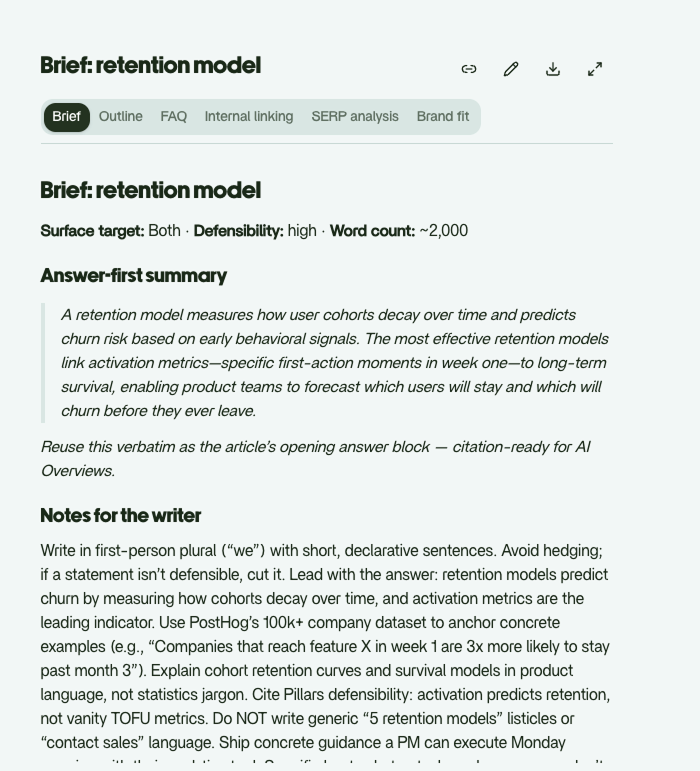
The core output is a single document that translates keyword strategy into clear writer instructions. It tells the writer the target keyword, the reader, the angle, and the reason the keyword is worth your time at all. A good brief makes a mediocre writer produce a rankable draft. A bad brief makes a great writer produce a polished article that never ranks. That is why how content briefs function as a strategic tool matters more than most agency owners admit when they treat the brief as a quick formality.
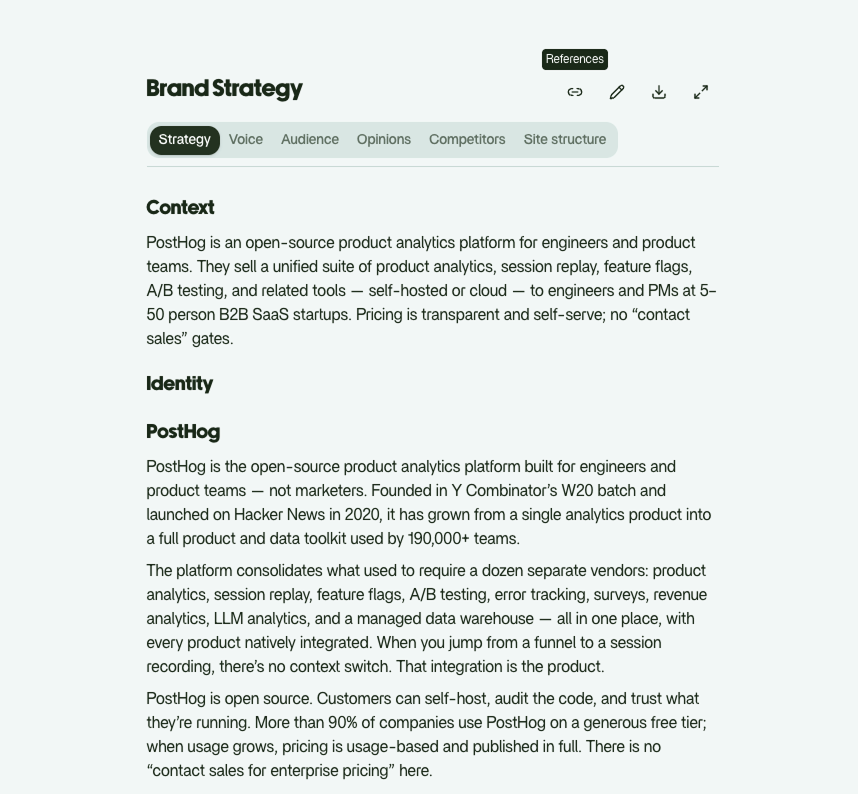
A complete brief contains five things, not one of them optional:
- Search intent classification pulled from the live SERP
- Analysis of competing pages, with the specific gaps to beat
- A section-by-section outline
- E-E-A-T signals: who should say this, and with what proof
- An internal link plan tying the article to its content pillar
Miss any of these and the writer fills the gap with a guess.
The 5 competencies that separate effective brief writers from average ones
Most brief writers can fill a template. Few can make the judgment calls inside it. These are the five competencies I score for, and each one is testable before you sign anything.
1. Search intent classification. Give the candidate a keyword and nothing else. Can they read the live SERP and tell you the dominant intent without being coached? Everything starts by the search intent. You cannot change what people are typing, only adapt your content around it. A writer who skips this step is guessing at the most important decision in the brief. If you want to see the discipline done properly, search intent classification in practice shows the level of reasoning to expect.
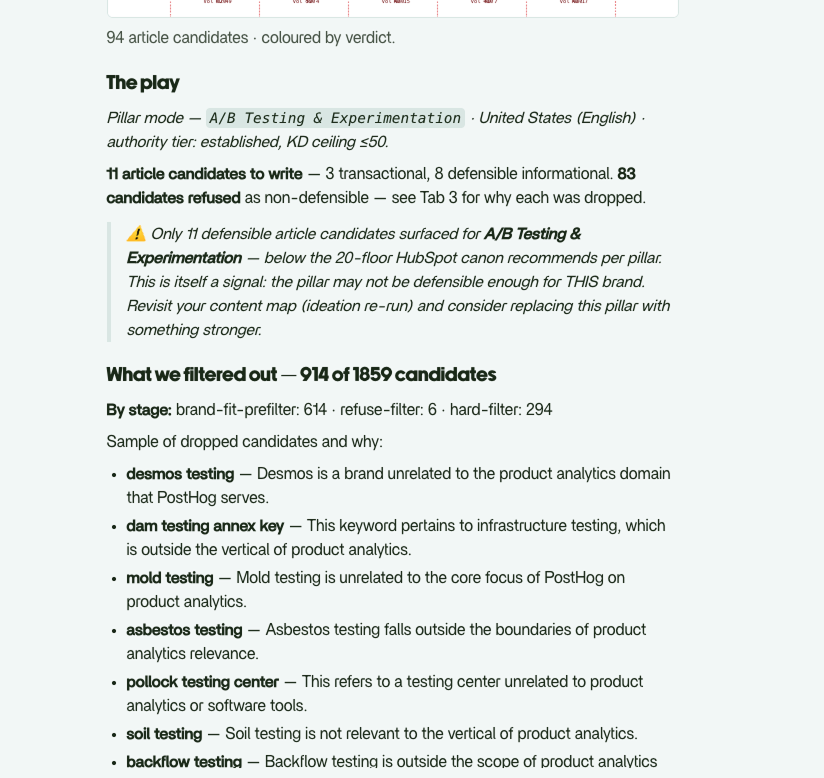
2. Defensibility judgment. A strong brief writer knows which keywords are worth targeting and which AI Overviews will simply absorb. They should hand you a list of articles that you want to write and a list of articles that you do not want to write, with a reason attached to each. If a candidate recommends a generic “what is X” explainer, that is a red flag. If you do not have a strong opinion, your content is going to be replaced by AI, because AI can easily generate that exact page.
3. SERP reading. Average writers report word-count ranges. Effective ones extract structural and content gaps: what every top page covers, what none of them cover, and where your client can say something the others can’t. Specific beats vague every time.
4. Editorial structure. Their outline should reflect what top-ranking pages cover while leaving deliberate room for differentiation. A brief that only mirrors competitors produces a copy. A brief that only chases novelty misses the intent. The skill is holding both.
5. Brand voice translation. Can they write a brief that sounds like the client, not like generic SEO instructions? The brief carries voice into every section, or it doesn’t. This is the competency that separates a contractor who causes strategic drift from one you can trust on client accounts.
How to test a brief writer candidate with a paid trial brief
Never hire on a portfolio alone. Run a paid test brief on a real keyword from one of your client’s content clusters. Pay for it, because you want their actual work, not a sales pitch. Here is the order I evaluate in.
Check the intent call first. Before you read the outline, the competing-page notes, or anything else, ask one question: did they get the intent right? A brief writer who correctly classifies search intent eliminates the most expensive failure in content production: publishing an article that targets the wrong intent and never ranks. If the intent is wrong, stop reading. The rest of the brief is built on sand.
Then check the competing-URL notes for specificity. “The top results are listicles” is useless. “Three of the top five are how-tos, none classify intent, and none cite first-party data” is a brief writer doing the job. Vague observations are a disqualifying signal.
Watch for these red flags:
- No defensibility rationale. They never say why this keyword is good or why this keyword is not good.
- Outlines that restate the H2 in each bullet instead of giving the writer real instructions.
- No mention of E-E-A-T signals or who should author the piece.
- An outline that ignores the content pillar the article belongs to.
Score the result against a real benchmark. My brief methodology synthesizes Backlinko’s canonical 7-step SEO program with Reforge’s 2026 strategic framework, the two most rigorous public frameworks for how SEO works now that AI Overviews and LLM citations have reshaped search. Use that as your bar. If you want a concrete reference for what a finished brief should contain, score the candidate’s submission against a ready-to-use content brief template and look for what is missing.
When to hire a brief writer vs. use an AI brief tool
The choice depends on what your bottleneck actually is.
Hire a human brief writer when the work requires deep brand immersion and the brief must carry a specific voice into every section. Some clients have a strong opinion that a contractor needs hours of conversation to internalize. For those accounts, a person who has sat with the brand is worth the cost.
Use an AI brief tool when volume is the bottleneck and consistent methodology across multiple client accounts matters more than bespoke positioning. This is the case for most agencies managing 3 to 10 accounts. You are not short on talent. You are short on hours, and brief production eats the same billable time on every account.
The cost math is simple. A manual brief runs from $50 to $300 depending on depth and the writer’s experience. That adds up fast across a roster. Andy handles the brief-writing step automatically, running live SERP data for each keyword and brand interview data from each client’s website crawl, so the strategic layer is consistent every time. This is not just a tool. This is really an app that does the brand strategy, keyword research, and brief in one workflow, and tells you the thinking behind every call so you can sign off on it.
The hybrid case is the one most agencies land on. Use Andy for the brief structure, intent call, and SERP analysis, then put a brief editor on top to apply the client brand layer. You get methodology at scale and voice where it counts, without paying a contractor to redo the strategic work on every single keyword.
Frequently Asked Questions
What is the difference between a content brief writer and a content writer?
The brief writer produces the strategy document. The content writer executes it into prose. Different skills, different deliverables, and conflating them is why so many articles miss: a great writer cannot rescue a brief that targeted the wrong intent.
What skills should a freelance brief writer have?
Five: search intent classification, SERP reading, defensibility judgment, editorial structure, and brand voice translation. The first one is non-negotiable, because intent is the decision every other part of the brief depends on.
How do I test a freelance brief writer before hiring them?
Run a paid test brief on a real keyword from a client cluster. Evaluate the intent call first, then the specificity of their competing-page notes, then the logic of their outline. If the intent is wrong, you have your answer before reading further.
How much do freelance brief writers charge?
Most charge $50 to $300 per brief, depending on research depth, SEO scope, and experience. The cheap end usually skips defensibility analysis and intent classification, which is exactly the work that makes a brief worth paying for.
Can AI tools replace a freelance brief writer?
Andy automates full brief generation, including the intent call, SERP gaps, and internal link plan. It is the right choice when volume or cross-account consistency outweighs bespoke brand immersion. For a single client with a deeply specific voice, a human editor on top of the AI brief is the stronger play.