Semantic Topic Clustering Examples: Mapping Search Intent to Pillar Strategy
By Ben, Founder
Semantic topic clustering groups keywords and content by shared meaning and search intent rather than exact keyword matches. It reveals how related topics branch from a core concept, helping you structure pillar pages and identify content gaps. By analyzing search intent across clusters, you prioritize topics that align with your brand’s expertise and audience needs.
You wrote some articles. They didn’t rank. The reason is almost always the same: the keyword research was skipped or shallow, so the content had no structure Google could trust. This piece shows you real semantic clusters from live keyword research, how to read the search intent inside them, and how to turn that into a content plan you can actually defend.
What semantic topic clustering is (and why it matters for pillar architecture)
Semantic topic clustering groups keywords and topics by what they mean and what the searcher wants, not by which words happen to overlap. “How to build semantic clusters” and “topic clustering for content strategy” share almost no exact words. Same intent. Same cluster.
That is the difference from traditional keyword clustering. Keyword clustering matches strings. It sees “semantic clustering seo” and “semantic clustering pdf” as close because the words line up. But one searcher wants a working method and the other wants a downloadable reference. Different intent, different content, and grouping them by string overlap hides that.
Why does this matter for pillar architecture? Because meaning is what Google and LLMs actually model. When you organize content the way intent branches from a core concept, you mirror the structure search engines already understand. That is how you think in clusters and content pillars instead of publishing one-off posts that float with no parent topic.
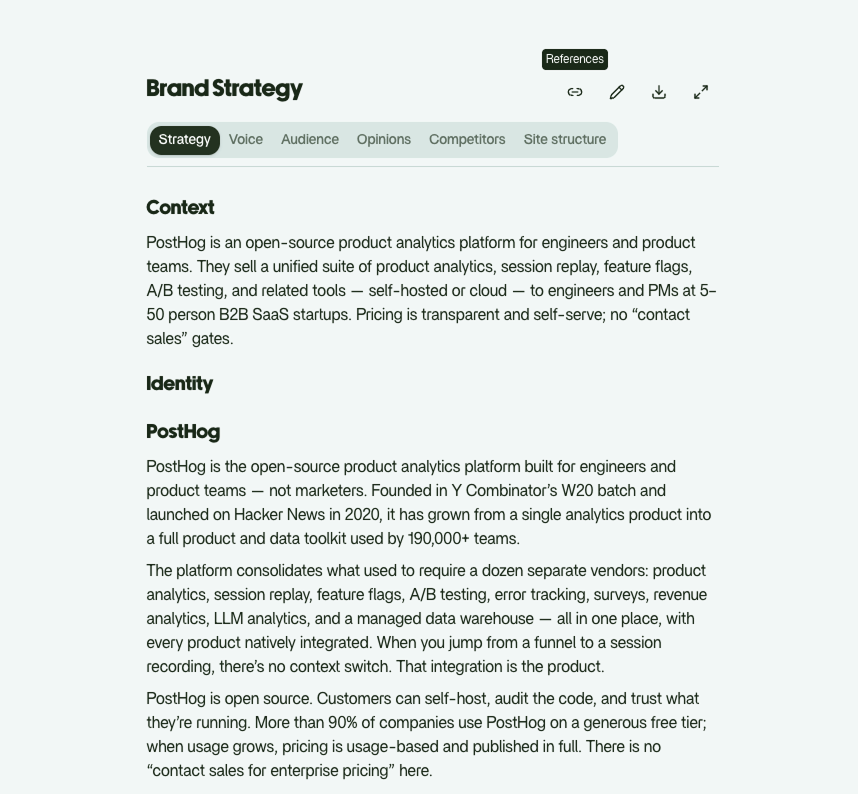
This connects directly to topical authority. A pillar surrounded by tightly related cluster articles tells the system you cover the whole concept, not one slice of it. That is how you signal to Google and to LLMs that you are an expert. And it forces a useful question early: which clusters does your brand have the right to own, and which are noise. Andy classifies content using the Reforge 4-bucket taxonomy of defensible versus non-defensible topics, so the cluster map is never just a list of words. It is the start of a strategy.
How to identify semantic clusters from live SERP analysis
Start with the SERP, not a spreadsheet. Everything starts by the search intent, and the fastest way to read intent is to look at what already ranks. Take a seed keyword like “semantic topic clustering examples” and fetch the top 10 results.
Here is the four-step process Andy runs on live SERP data for every keyword research run:
- Pull the top 10 results for the seed keyword. Andy fetches this in real time, with volume, difficulty, and the dominant intent for each result.
- Read the intent pattern across those results. Are they definitions? Tutorials? Tool comparisons? PDFs? The mix tells you what searchers actually expect.
- Spot the thematic branches. One branch is “what it is” explainers. Another is “how to build clusters” methodology. A third is “keyword clustering vs semantic clustering” comparison. Each branch is a sub-cluster.
- Document the gap. Write down what the SERP covers well and what it skips. The skip is the opportunity, and most people never look for it.
For our seed keyword, the live data shows the top results lean heavy on definitions and academic theory. Methodology with real examples is thin. Defensibility framing tied to brand expertise is missing entirely. Three branches present, one branch wide open.
This is the part that separates a strategy from a guess. You are not inventing topics. You are reading what people type and what the current page-one results give them, then finding the distance between the two. You cannot change what people are typing. You can only build the content the SERP is failing to deliver.
Once you have your branches and sub-clusters mapped, you can refine them into publishable groups. Here is the keyword clustering methodology we use to turn raw SERP branches into a clean cluster map.
How to map semantic clusters to pillar architecture
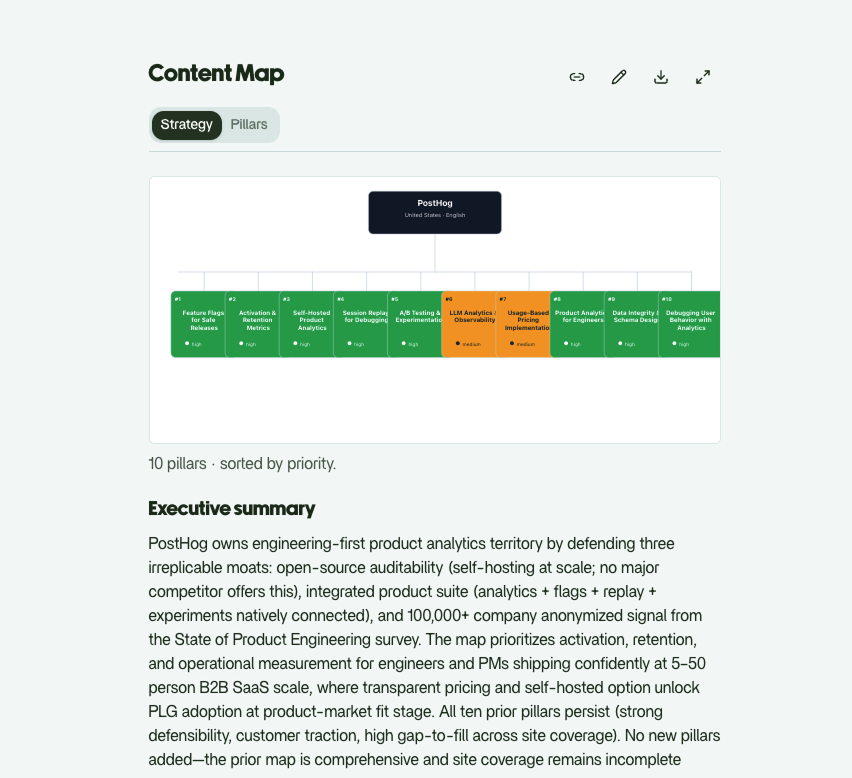
Each semantic cluster is a natural pillar topic or a sub-topic under one. The “what is semantic clustering” branch is pillar-level. “How to build semantic clusters” and “keyword clustering vs semantic clustering” are supporting articles that link up to it. You are not deciding structure by taste. The intent branches hand you the structure.
Next, prioritize. Not every cluster deserves the same effort. Use search volume to size the demand and competition to gauge the cost of ranking. A cluster with real volume and a weak page-one field is where you start. A cluster with high volume and ten authoritative results is a later fight, if at all.
Then apply the discipline most people skip: defensibility. The Reforge 4-bucket taxonomy sorts content into defensible and non-defensible. Defensible content draws on your original data, your first-party experience, and your strong opinion. Non-defensible content is the generic “what is X” explainer that AI Overviews absorb and reprint without ever citing you.
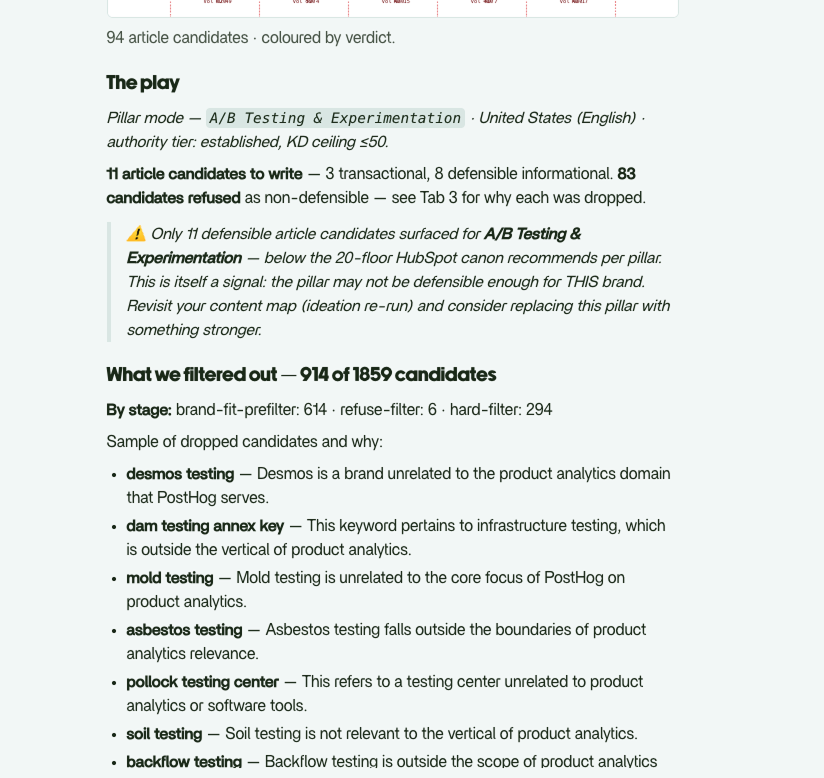
Run each cluster through that filter. Does this topic touch something your brand has actually done, measured, or fought through? If yes, it is a candidate. If it is a 101 definition anyone could write, skip it, because your content is going to be replaced by AI the moment it has no opinion. The output is a list of articles that you want to write and a list of articles that you do not want to write. That second list is the one that saves you months.
This is exactly how semantic clustering feeds pillar-based content architecture. Defensible clusters become pillars and supporting articles. Non-defensible clusters get cut before they cost you a single hour.
How search intent gaps reveal your strongest content opportunities
A gap is a question inside a cluster that the page-one results answer badly or not at all. That is the whole game. Semantic clusters reveal search intent gaps that defensible content strategies use to prioritize pillar topics and identify content opportunities aligned with brand expertise.
Take our live example again. Across the “semantic topic clustering examples” SERP, almost every result defines the term and stops. The keyword in the query is “examples,” but the results give theory. The searcher wants to see real clusters mapped to a real decision. The SERP leaves that unanswered. That gap is the reason this article exists.
Now confirm the gap is worth it. A gap only becomes an article if your brand can defend it. We can, because the example is built on first-party keyword research data: live SERP analysis, real intent patterns, and a defensibility call on each cluster. That is the content no definition-only competitor can copy, because they do not have the data or the method behind it.
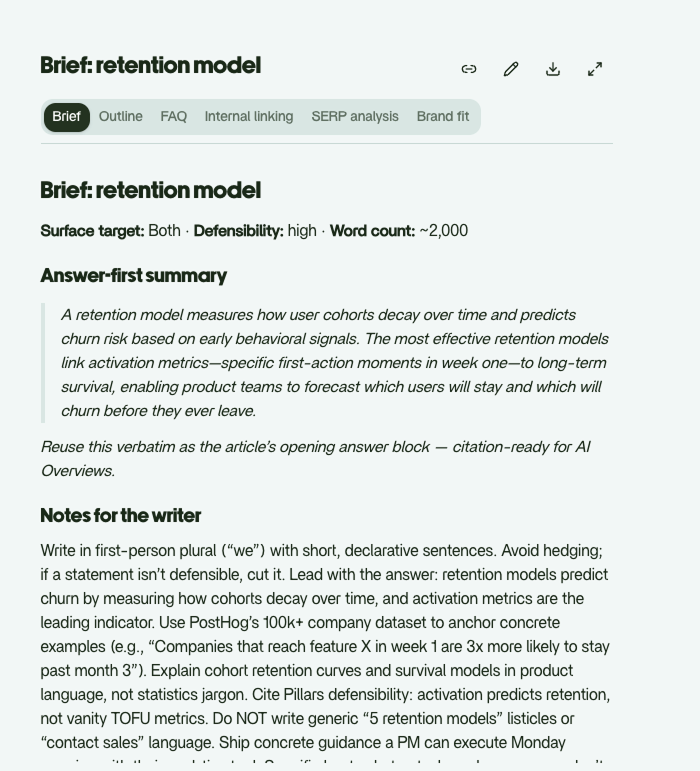
So write down the intent opportunity in plain language. For this topic it reads: searchers want to see semantic clusters turned into pillar decisions with real data, and the SERP only gives them definitions. That one sentence is the brief. It tells you the angle, the proof you need, and why this keyword is good while a generic “what is clustering” keyword is not.
The reason this works for a founder with no SEO hire is that it removes guesswork. You are not asking what to write about. You are reading where demand exists, where the current results fall short, and where your brand has the experience to win. Start with your brand, find the gap, and defend it. Once your clusters and pillars are mapped, here is how to link semantic clusters together so the topical authority actually compounds.
FAQ
What’s the difference between semantic clustering and keyword clustering?
Keyword clustering groups keywords by exact-match word overlap. Semantic clustering groups them by meaning and search intent, so two queries with no shared words can still land in the same cluster. Semantic clustering wins because it mirrors the intent structure Google and LLMs already model.
How do you identify semantic clusters from SERP data?
Fetch the top 10 results for a seed keyword, read the search intent across them, and spot the thematic branches that emerge. Each branch is a sub-cluster, and the topics the results ignore are your gaps. Andy runs this automatically on live SERP data for every keyword research run.
Why does semantic clustering help pillar architecture?
Each semantic cluster maps to a pillar or a sub-topic beneath it, so the intent branches hand you the site structure instead of you guessing it. Mapping clusters shows which topics your audience actually searches, which guides prioritization and your defensibility call on each one.
How do search intent gaps reveal content opportunities?
Gaps are the questions inside a cluster that page-one results answer poorly or skip. If your brand can defend the topic with real expertise, original data, or a strong opinion, that gap is your content opportunity. If you cannot defend it, leave it for the competitors who will get replaced by AI.