What Are Content Pillars? The SEO Defensibility Framework
Ben — Founder
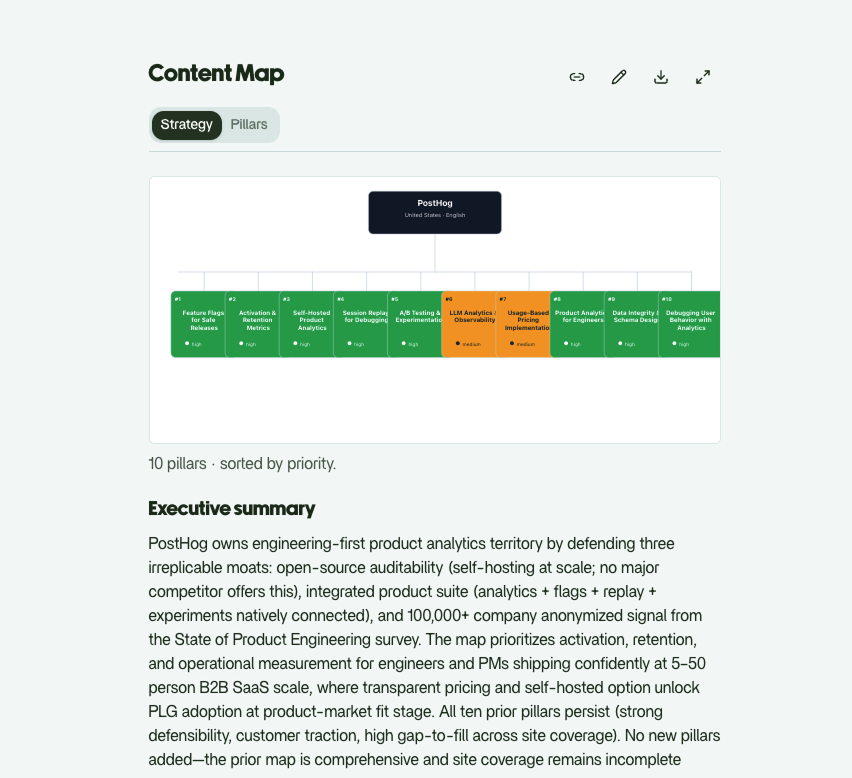
Content pillars are the core expertise areas you build topical authority around. Unlike social media pillars (which are content types like ‘educational’ or ‘promotional’), SEO content pillars are keyword clusters aligned with your real expertise. They signal E-E-A-T to search engines and LLM citation systems, helping you rank defensibly.
You’re a founder with a blog and no SEO hire. You don’t know which topics are worth writing about, you’ve published articles that ranked nowhere, and every guide you find online means something different by “pillar.” This article fixes that. It explains what content pillars actually are for SEO, why they decide whether your brand-first keyword research strategy produces ranking opportunities or wasted effort, and how to pick yours without guessing.
What Are Content Pillars?
Content pillars are the core expertise areas your brand builds topical authority around. Think two to five subjects where you genuinely know more than the next site. Everything you publish hangs off one of them.
Here is the line that trips up most founders. The “content pillars” you read about on social media marketing blogs are content-type buckets: educational, promotional, entertaining, behind-the-scenes. That is a posting schedule, not an SEO strategy. SEO pillars are different. Content pillars are expertise-aligned keyword clusters, not social media content types. They signal defensibility to search engines and LLM citation systems.
The word “real” matters. A pillar tied to aspiration (“we’d love to be known for X”) is a pillar you cannot defend. A pillar tied to hands-on experience is one you can. This is why we say: start with your brand. Have a very global understanding first of your brand, then pick the few areas you can actually own. Those areas become the foundation for every keyword decision that follows.
Why Content Pillars Matter for SEO
Pillars are how you signal to Google and to LLMs that you are an expert. One isolated article on a topic looks like a guess. Ten connected articles covering a topic from every angle looks like authority. That cluster signal is the primary driver of rankings in 2026, and it feeds E-E-A-T (Experience, Expertise, Authoritativeness, Trust), the quality framework Google and LLM citation systems both read.
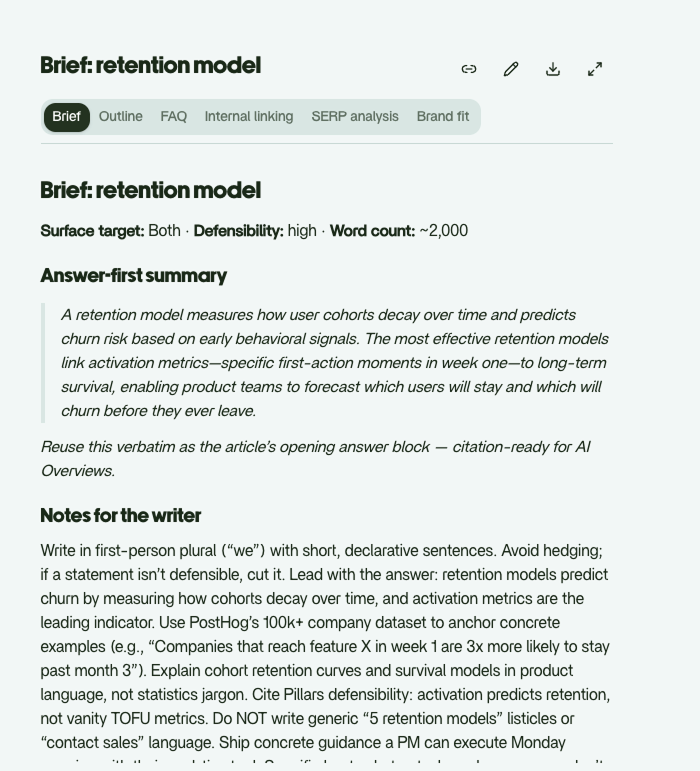
Pillars also change what keyword research gives you back. Research without brand context is isolated work. It produces one article, not a strategy. Anchor your research to a pillar and you get a defensible cluster, plus a clear map for identifying keyword gaps within your pillars, the related searches nobody on your team has covered yet.
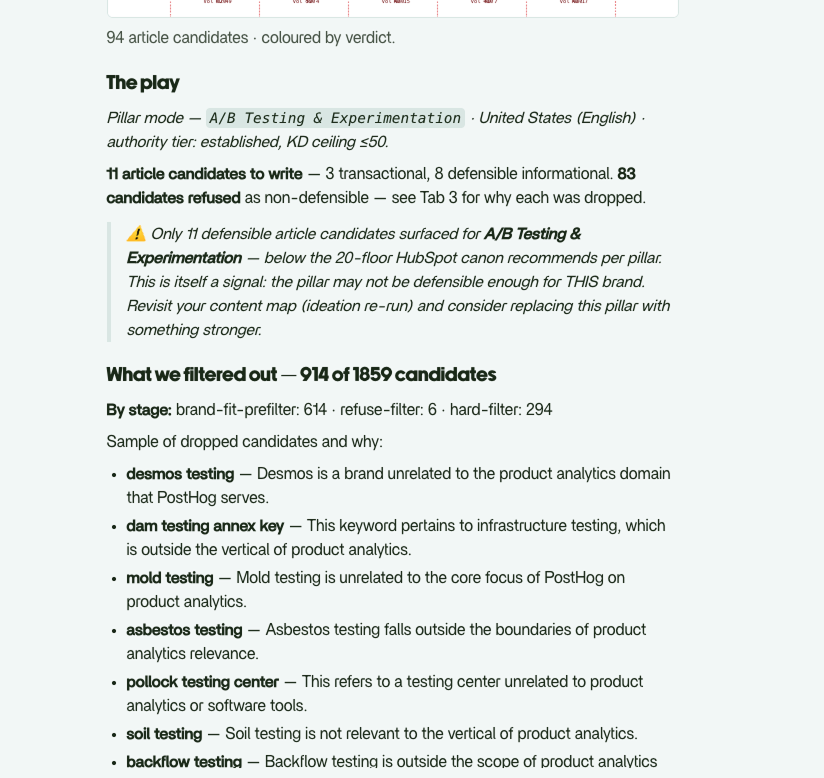
Here is where Andy uses the Reforge defensibility framework. Reforge sorts content into four buckets by how defensible it is against AI. Generic “what is X” explainers sit in the non-defensible bucket. AI Overviews absorb them, and you’ll never recoup the effort. Content built on original data and first-party experience sits in the defensible bucket. Run each candidate pillar through that test before you write a word. If a pillar only supports content AI can regenerate for free, it is the wrong pillar. This is the difference between why this keyword is good or why this keyword is not good.
How to Identify Your Content Pillars
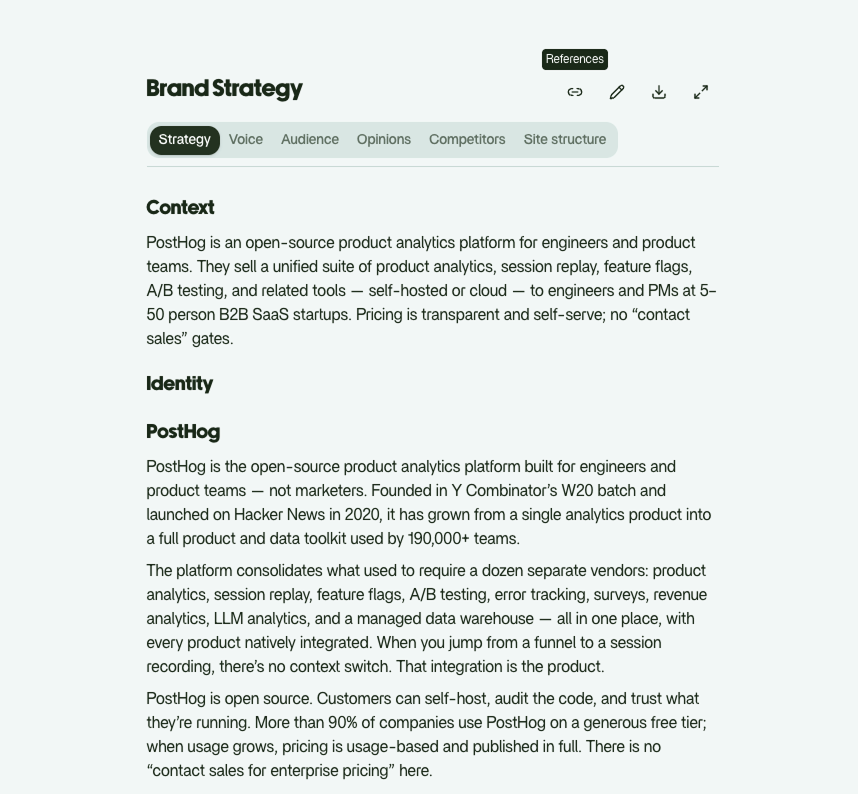
Start with a list. Write down every area where your team has actual hands-on experience, not the topics you wish you owned. Andy does this through brand interview data collected from each user’s live website crawl and onboarding session, surfacing what your brand actually has authority on rather than what a template says you should.
Then cross-check that list against your audience. What problems do they bring to Google or ChatGPT? Everything starts by the search intent and by the keyword the user typed. You cannot change what people are typing. Where your genuine expertise overlaps with what your audience searches, you have a pillar. Where it doesn’t, you risk avoiding intent mismatches in pillar selection, publishing expert content nobody is looking for.
A few rules from experience:
- Two to five pillars is normal. More does not mean better. It means thin coverage spread too wide.
- Drop any aspirational pillar. If you can’t point to real work behind it, you can’t defend it.
- Keep each pillar narrow enough that you could write twenty articles inside it.
The point is defensibility, not breadth. A small set of pillars you genuinely own beats a long list you half-cover. For practical application, see these real-world content pillar examples.
Content Pillars vs. Social Media Content Types
Let’s clear up the confusion directly, because it’s the reason half the advice online contradicts the other half.
Social media pillars are format buckets. “Educational,” “promotional,” “entertaining,” “behind-the-scenes.” They describe the shape of a post and how often you publish each type. Useful for an Instagram calendar. Useless for ranking.
SEO content pillars are topical clusters of related keywords. They describe what you’re an authority on, not what format you posted in. One is a publishing rhythm. The other is an authority signal that Google and LLMs read when deciding who to cite.
Why does the distinction decide your strategy? Because if you build your blog around “educational vs. promotional,” you’ve organized your content by tone instead of by topic. Search engines have nothing to cluster. No topical authority forms. Build around real expertise areas and every article reinforces the others. That is the whole game now. If you do not have a strong opinion, your content is going to be replaced by AI. Pillars are how you stake out the opinion and the territory at the same time.
Frequently Asked Questions
What are the 5 content pillars?
There’s no magic number, and “5” is a myth from social media templates. Most brands have two to five pillars based on genuine expertise areas. Pick the count your actual authority supports, not a round number.
What are some content pillar examples?
A SaaS company might own pricing, integrations, and security. A B2B services firm might build pillars around specific client pain points. Real pillars map to the questions your brand actually answers from experience, not generic topics anyone could write.
What’s the difference between content pillars and keyword clusters?
Pillars are the broad authority areas you commit to. Keyword clusters are the specific searches inside each one. A pillar like “security” contains clusters like “data encryption,” “compliance,” and “access control.” Pillars set direction; clusters fill it in.
How do I align my pillars with actual brand expertise?
List the areas where your team has hands-on experience. Cross-check that list against audience research and the pain points people search for. Andy uses brand interview data from your live website crawl to surface what you genuinely own authority on, so your pillars reflect real defensibility instead of guesswork.
Can I change my content pillars later?
Rarely, and you shouldn’t want to. Frequent changes signal inconsistency to search engines and dilute the authority you’ve built. Only pivot if your brand strategy genuinely shifts, not because a pillar feels slow.