Topical Relevance in SEO: How Google Recognizes Content Authority
By Ben — Founder
Topical relevance is how Google recognizes when a group of pages collectively address a single topic coherently. It’s built through cluster architecture—which articles you group together, how you link them internally, and how thoroughly you cover topic subtopics. This signals domain authority to Google. Unlike keyword density or publishing frequency, topical relevance depends on the structural relationships between your content pieces.
You’ve published twenty blog posts. They cover roughly the same subject. They still rank on page four. The problem is almost never the writing. It’s that Google can’t see how your pages connect, so it reads twenty isolated articles instead of one authoritative body of work. This piece explains the exact signals Google reads and how to build them on purpose.
If you want the structural foundation first, read our content pillar strategy framework. The rest of this article assumes you’ll think in clusters and content pillars, because that’s the only way these signals exist.
What Is Topical Relevance (and Why It’s Not Keyword Density)
Topical relevance is Google’s read on whether your site covers a subject thoroughly enough to be trusted on it. Not one page. The whole set.
Most people get this wrong because they were trained on keyword optimization. Keyword density is a page-level habit: cram the phrase in the title, the H2s, the alt text, hit some percentage. Modern algorithms largely ignore it. Google stopped counting how many times you said “topical content” a long time ago. It started measuring whether the pages around that one also make sense together.
Here’s the shift. A single page can rank for a single keyword. A cluster can own a topic. Owning the topic is what compounds, and it’s what survives AI Overviews lifting your one-off explainer. Topical relevance is built through cluster coherence and strategic internal linking, not keyword density or publishing frequency. That sentence is the whole article. Everything below is how you do it.
How Google’s Algorithm Recognizes Topical Relevance in Clusters
Google reads three structural signals. None of them is on the page in the way SEO tools usually count.
First, cluster architecture. Which articles belong together? Google infers this from how your content overlaps semantically and how it’s organized. A pillar page covers the broad topic. Supporting articles each take one subtopic and go deep. When those pieces share vocabulary, entities, and intent, the algorithm sees a coherent group rather than scattered posts.
Second, internal linking patterns. This is the signal most sites neglect. Links between your cluster pages tell Google which articles are about the same theme and which one is the authority hub. A supporting article that links up to the pillar, and a pillar that links down to every supporting piece, draws a map Google can actually follow. This is the how hub-and-spoke clusters work model, and it exists because the link graph is how machines understand relationships between pages.
Third, coverage depth. If you address eight of the ten subtopics a reader needs, Google sees a gap. Competing pages on this exact keyword stop at the dictionary definition and never explain the architecture. That’s the gap. Depth is a signal.
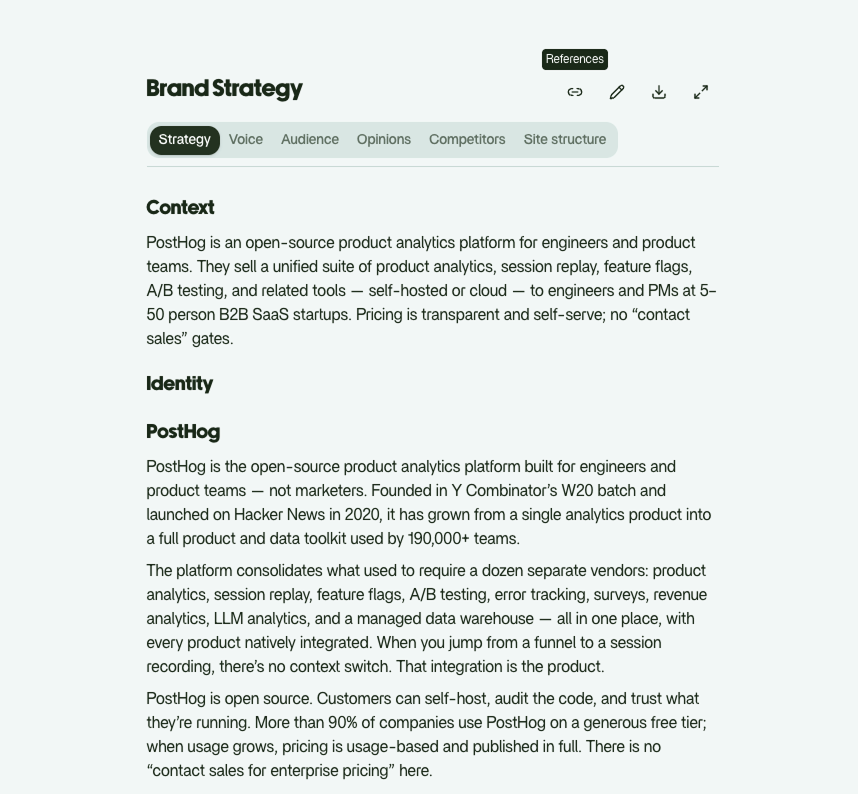
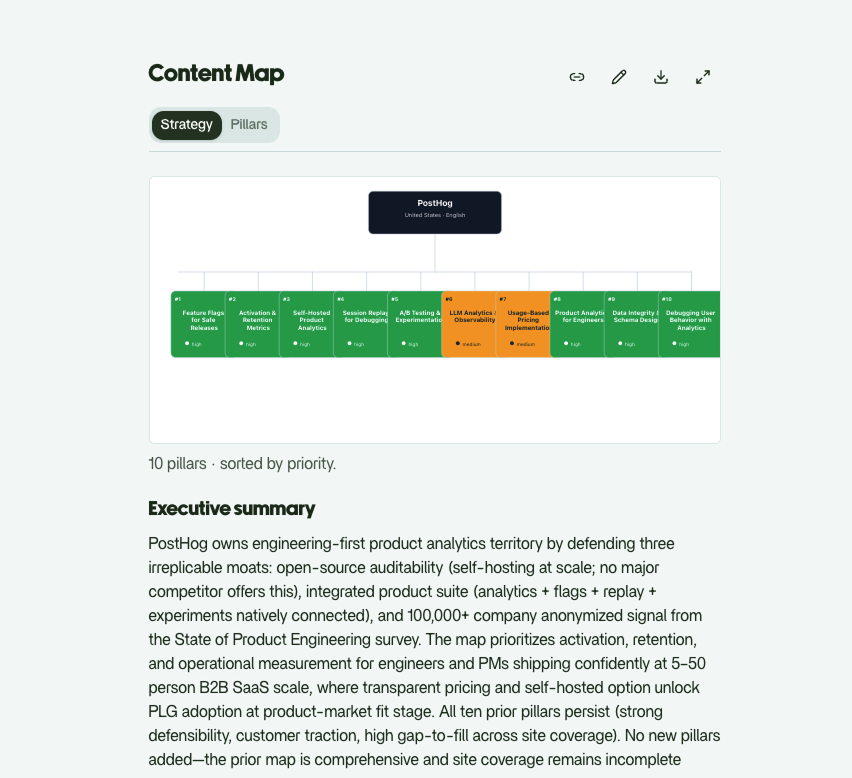
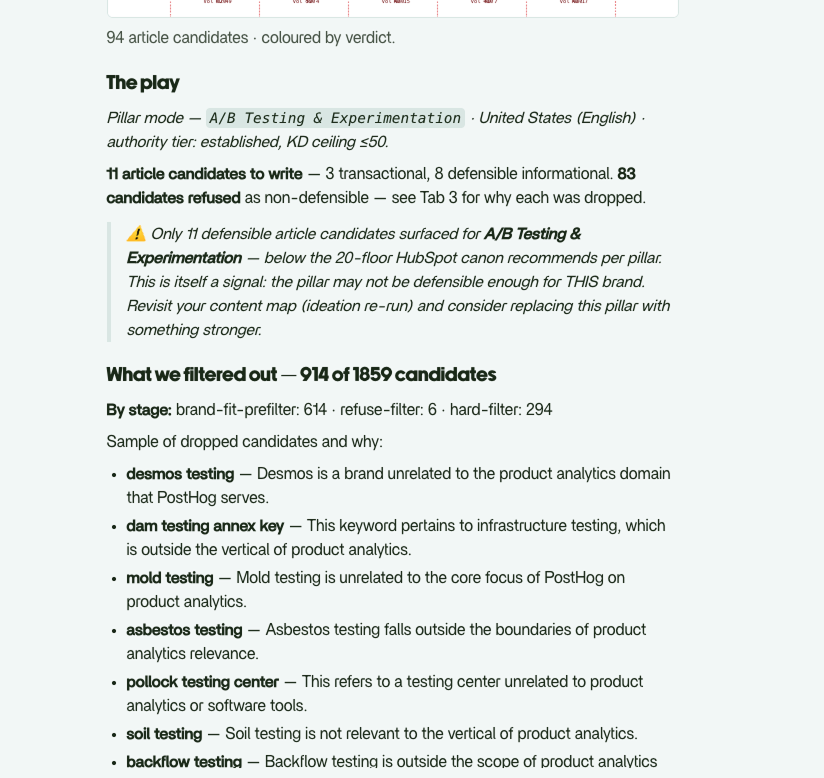
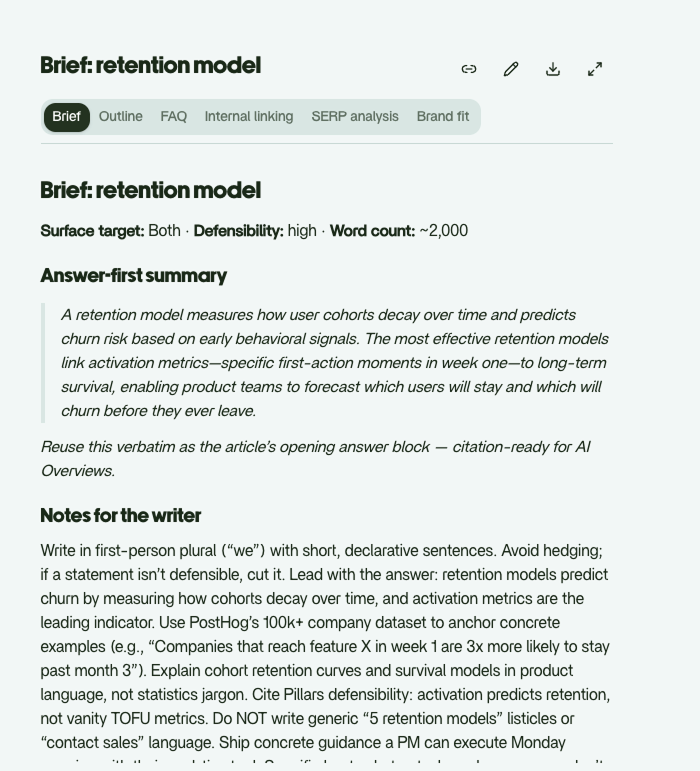
Andy operationalizes Backlinko’s canonical 7-step SEO program directly into the product workflow, combined with Reforge’s 2026 strategic framework for cluster-based topical authority. So when Andy builds a cluster, it forces topical authority analysis for every brand: which subtopics exist, which articles cover them, and how they link. That’s not theory. That’s the workflow.
Building Topical Relevance Into Your Content Strategy
Start with your brand. Have a very global understanding first of your brand: what it does, what strong opinion it holds, what separates it from competitors. You can’t own a topic you have no authentic claim to. Pick topics where your brand can speak with a real point of view, because if you do not have a strong opinion, your content is going to be replaced by AI.
Then map the subtopics. Take your pillar theme and list every question, angle, and sub-problem a reader brings to it. Each one is a candidate for a supporting article. The decision of which pieces to cluster together comes from intent: do these articles serve readers chasing the same broad goal? If yes, they belong in one cluster. Our templates for structuring your clusters give you the working structure for this so you’re not guessing.
Now the linking. This is where most strategies fall apart, so be deliberate:
- Every supporting article links to the pillar with descriptive anchor text naming the topic.
- The pillar links out to each supporting article in the cluster.
- Supporting articles link to each other when the subtopics genuinely connect, not because you needed a link.
Structure new content for this from the first draft. Before you write, you should know its pillar, its subtopic, and the three or four cluster links it will carry. Write the article to fit the cluster, never the other way around.
Common Mistakes That Destroy Topical Relevance Signals
Four mistakes flatten everything you just built.
Clustering unrelated content. People assume volume signals authority, so they pile thirty loosely related posts under one category and call it a cluster. Google reads incoherence, not authority. Thirty articles on five different themes is five weak clusters, not one strong one.
Linking randomly or not at all. A cluster with no internal links is invisible as a cluster. Google sees individual pages. Worse is linking by reflex, dropping a link to your homepage or a random post because the plugin suggested it. Links without purpose dilute the map instead of drawing it.
Over-relying on keyword matching. You can match the keyword on every page and still have zero topical coherence, because matching a phrase is not covering a topic. This is the keyword-density habit wearing a new costume.
Half-covering many topics. Spreading thin across ten subjects beats nothing, but it never builds authority on any of them. Depth in one cluster beats shallow coverage of five. Commit. Finish the cluster before you start the next.
This is the difference between a list of articles that you want to write and a list of articles that you do not want to write. Most teams write whatever’s easy. The signal comes from what you choose to cover completely.
Topical Relevance as the Foundation of Content Pillar Strategy
Cluster coherence compounds. One finished cluster tells Google you’re credible on a subtopic. Three or four interlinked clusters under a clear pillar tell Google you’re an authority on the whole domain. That accumulated trust is what lifts new articles faster, because they publish into an existing web of relevance instead of starting cold.
This is why pillar selection comes first. The pillar decides which clusters exist, which subtopics matter, and how the internal links flow. Choose the pillar well and topical relevance falls out of the structure downstream. Choose it badly and no amount of writing fixes the incoherence. For applied patterns, study these real semantic clustering examples to see how a coherent cluster reads to a search engine.
Think in clusters and content pillars. That’s how you signal to Google and to LLMs that you are an expert. Andy’s methodology synthesizes Backlinko’s canonical program with Reforge’s 2026 frame for exactly this reason: the workflow goes brand strategy, then content pillars, then keyword research, then content brief, then article. Topical relevance isn’t a tactic you add at the end. It’s the architecture you start with.
Frequently Asked Questions
What does topically relevant mean?
Topically relevant content is thematically coherent within a cluster, linked strategically to the other pieces around it, and collectively comprehensive on a single subject. One article isn’t topically relevant on its own. The cluster is.
How does Google recognize topical authority?
Through cluster coherence and strategic internal linking. Coherence is how well your articles address a single theme together. The internal links show Google the relationships between pieces, mapping which page is the authority hub and which pages support it.
What’s the difference between topical relevance and keyword density?
Topical relevance depends on cluster structure and the links between your pages. Keyword density is a surface metric counting how often a phrase appears on one page, and modern algorithms largely ignore it. One is architecture. The other is a habit Google stopped rewarding years ago.
How many articles should I include in a content cluster?
It depends on topic breadth and how deeply you cover each subtopic. A narrow topic might need five supporting articles around a pillar. A broad one needs more. Andy’s pillar framework decides this from the subtopic count and reader intent, not from an arbitrary number.
Do LSI keywords matter for topical relevance?
LSI (latent semantic indexing) keywords are semantic variations of your main topic. They support topical relevance by helping Google confirm your cluster covers the subject comprehensively. Useful as a coverage check, but secondary to cluster architecture and internal linking, which carry the real signal.